


A hairline crack in stucco is a thin line in the cement, under 1/16 inch. You can see it. On a Tampa house that line is common on the south and west walls, and at the corners of windows. The sort of cracks, and which ones are not a paint-day fill, is on the stucco repair page.
A hairline and a wide crack are not the same job. Width decides it.
Are hairline cracks in stucco normal?
Yes, when the line stays under 1/16 inch. Stucco is cement. It moves when the wall heats in the afternoon and a storm cools it the same day. Humidity stays high, so the wall also takes on water and gives it back. That movement opens a thin line. A line that stays that thin is the ordinary movement of the wall.
It is not, by itself, a sign the house is coming apart. A painter reading the elevation is sorting the crack for paint. That look is not a foundation diagnosis.

The sun side is where you notice the line first. South and west walls in Westchase, Citrus Park, Carrollwood, and Town N Country take the afternoon light. The shaded front can still look even while the side wall shows the hairline and, on an older coat, chalk. Rub the paint. If color comes off on your hand, the film is dead. That is a wash, not a crack fill. Best exterior paint for Florida stucco is the coating choice after the wall is clean. A crack and a chalked wall can sit on the same elevation.
Do hairline cracks need their own repair day?
Under 1/16 inch, no. The line is sealed with exterior acrylic caulk when the wall is painted. It does not get a separate patch day.
From 1/16 inch to 1/4 inch, yes. That moderate crack is filled with elastomeric patching compound and tooled flush with the texture before the color goes on. Paint over an open line of that size leaves a shadow, and the line comes back through the film. The patch has to meet the texture that is already on the wall. A fill that sits proud, or a fill that is slick against a rough field, reads as a stripe after the color is on.
Over 1/4 inch, or a crack that opens again after it was filled, is past a paint visit. A stucco specialist does that section. Paint waits until that work is finished. Westchase Painting Company does not replace stucco.
Look at the line in daylight and compare it to a ruler. The stucco repair page is where that sort is written as the job. This note is how to tell which line you are looking at.
Cracks in stucco around windows
Window corners are where a short line grows into a longer one, because the opening is a break in the field. The crack often starts at a corner and runs out into the wall, or it follows the trim for a few inches and then turns.
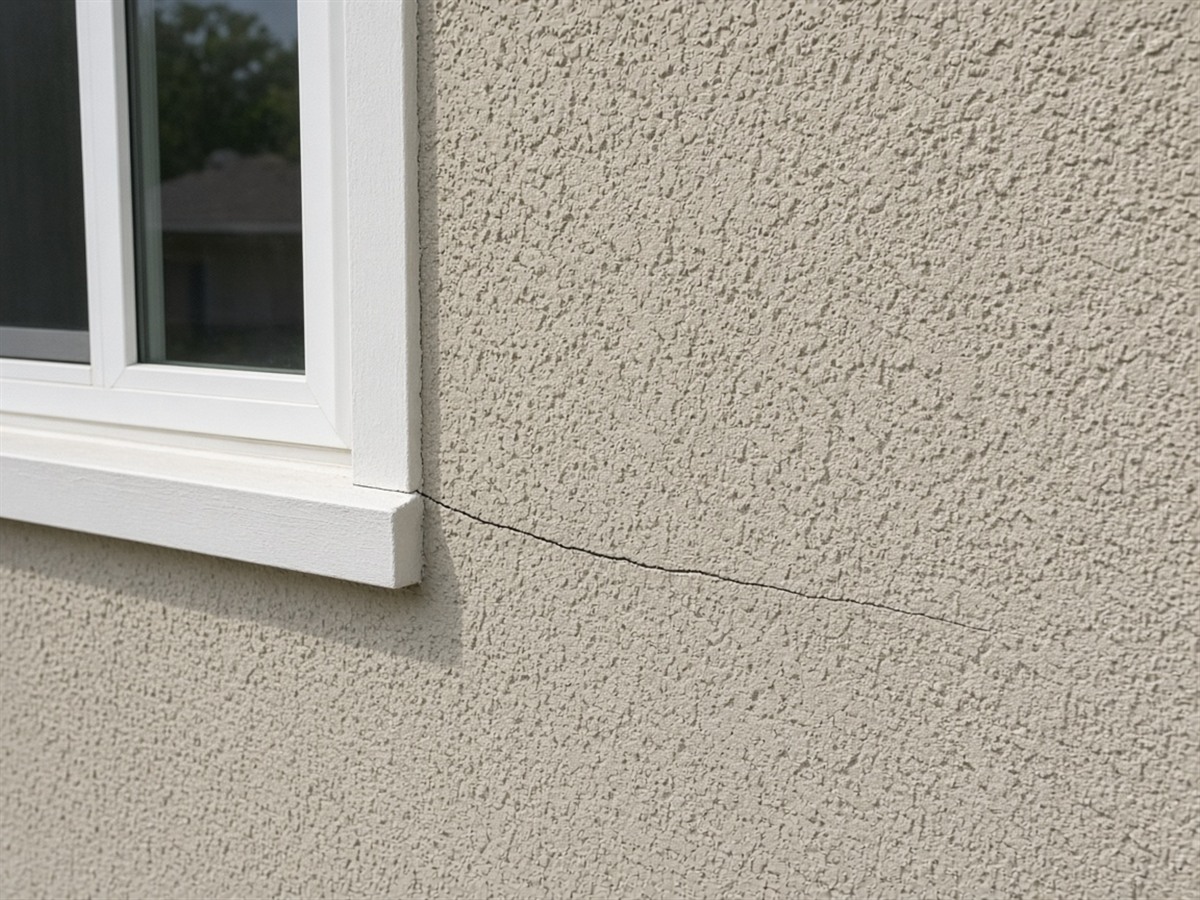
A hairline at one corner, still under 1/16 inch, is sealed with the rest of the paint visit. A line that rings the whole window, a stair-step that climbs from the sill, or a long horizontal line at the head of the opening is marked with the wide cracks. Width and whether the line is still moving decide it. A ring around the window is not sealed and painted the same day if the crack is already over 1/4 inch or if an old fill has opened again.

Caulk that has pulled away from the window frame is a joint, not a crack in the field. That joint is closed on the same exterior visit, before the wall is coated. The wash, the dry time, and the order of the coats are in Preparing Stucco for Painting in Tampa.
Stucco cracks that stop the paint
On a walk, every line gets split. A hairline stays with the paint day. A crack that has moved does not.
A stair-step line, a long horizontal line, or a crack that rings a window is marked for a specialist when it is wider than 1/4 inch or when it keeps opening. The same mark goes on a section that sounds hollow when you knock it. Hollow stucco has let go of the wall behind it. Paint will not hold that piece. The section goes to a stucco specialist. This company does not cut stucco out and replace it.
Paint will hide a hairline for a while if the wall is dry and the film can stretch a little. Paint will not close a wide crack. The film splits on the same line, and the next coat has to come off before anyone can fill it.

White dust on the same wall is a different mark. That powder is salt left by water moving through the cement. How to tell it from mildew and from chalk is in Efflorescence on Stucco. Salts come off before a coating will hold. A crack and a powder patch can share a wall. They are not one repair.
The coating visit itself is stucco painting. The full exterior, including soffit and trim, is exterior painting.
Westchase Painting Company reads these lines on houses in Westchase, Citrus Park, Carrollwood, and Town N Country. The shop is on Huntfield Street. Call (813) 320-8710 to book the walk.