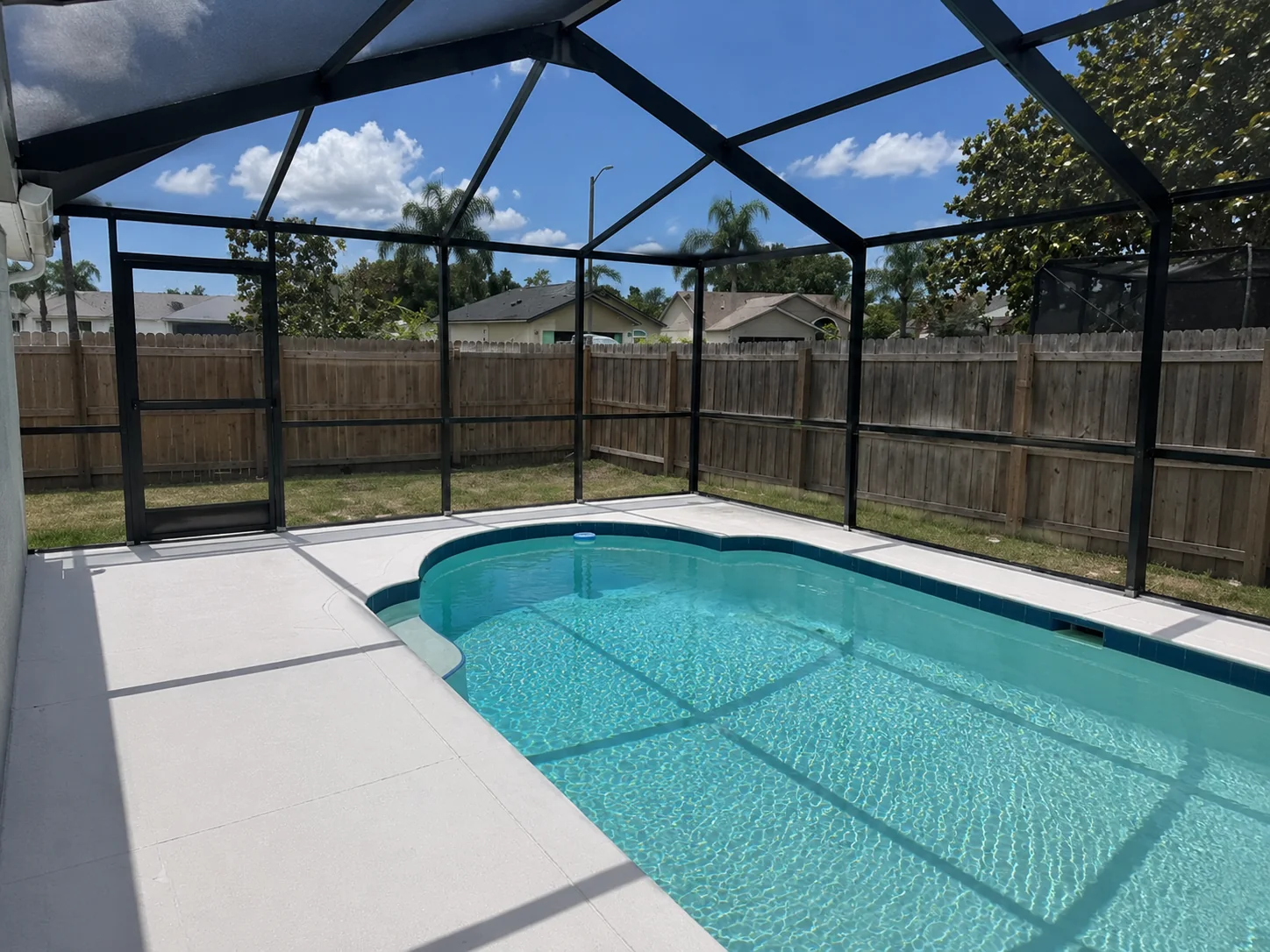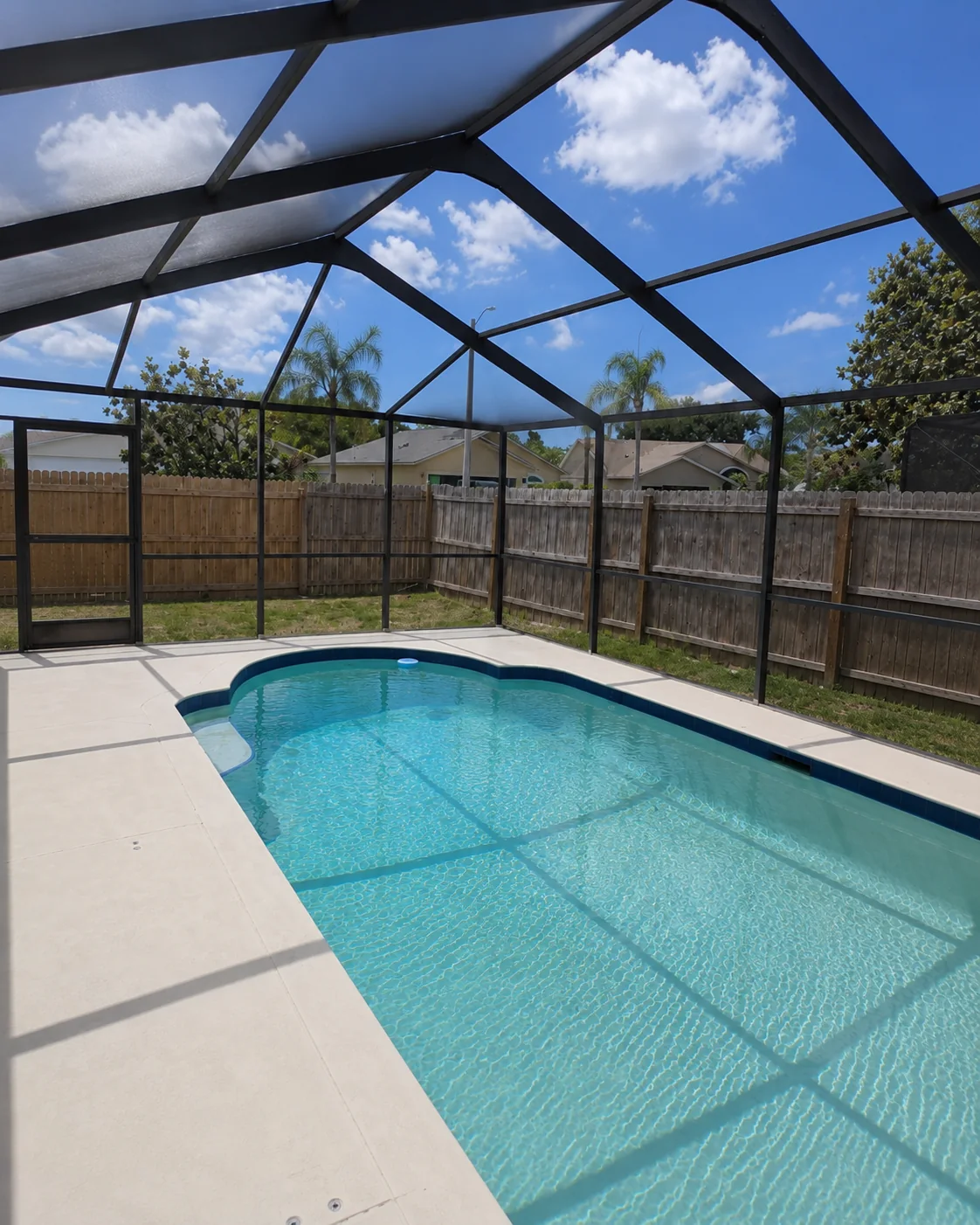
Pool cage painting is one of the most Florida-specific home improvement projects that exists. Over 65% of homes in the Tampa Bay area with in-ground pools have aluminum screen enclosures, and these structures take a relentless beating from chlorine off-gassing, UV radiation, humidity, and seasonal storms. A faded, stained, or rusting pool cage drags down your entire home's curb appeal, and a professional repaint can make it look brand new for a fraction of what replacement costs.
Westchase Painting Company paints pool cage frames throughout Westchase, Carrollwood, South Tampa, and the greater Tampa Bay area. Our process is specifically engineered for pool enclosure aluminum, not a modified version of general exterior painting.
Why Do Pool Cages Deteriorate So Quickly in Tampa?
A pool cage in Tampa Bay is exposed to a uniquely destructive combination of environmental factors that no other exterior structure on your property faces simultaneously:
- Chlorine off-gassing: Pool water continuously releases chlorine gas, which rises and directly contacts the aluminum frame. This chemical exposure accelerates oxidation and coating breakdown, particularly on horizontal cross-members directly above the pool surface where chlorine concentration is highest.
- Salt air: Homes within 20 miles of the Gulf Coast, which includes most of the Tampa Bay service area, receive salt-laden air that deposits on metal surfaces. Salt acts as an electrolyte that dramatically speeds up galvanic corrosion, especially at fastener points where dissimilar metals contact each other.
- UV degradation: Tampa receives approximately 2,900 hours of sunshine annually. UV radiation breaks down the factory powder coating on aluminum pool cage members, causing chalking, color fading, and eventual loss of protective function. South and west-facing cage surfaces degrade fastest.
- Standing water: Pool cage design creates numerous horizontal surfaces and joints where water collects after rain. These areas retain moisture far longer than vertical surfaces, creating localized corrosion zones that are often the first places where rust appears.
- Storm stress: Tampa Bay averages 82 thunderstorm days per year. Wind-driven rain forces water into joints, fastener holes, and micro-cracks in existing coatings, accelerating corrosion from the inside out.
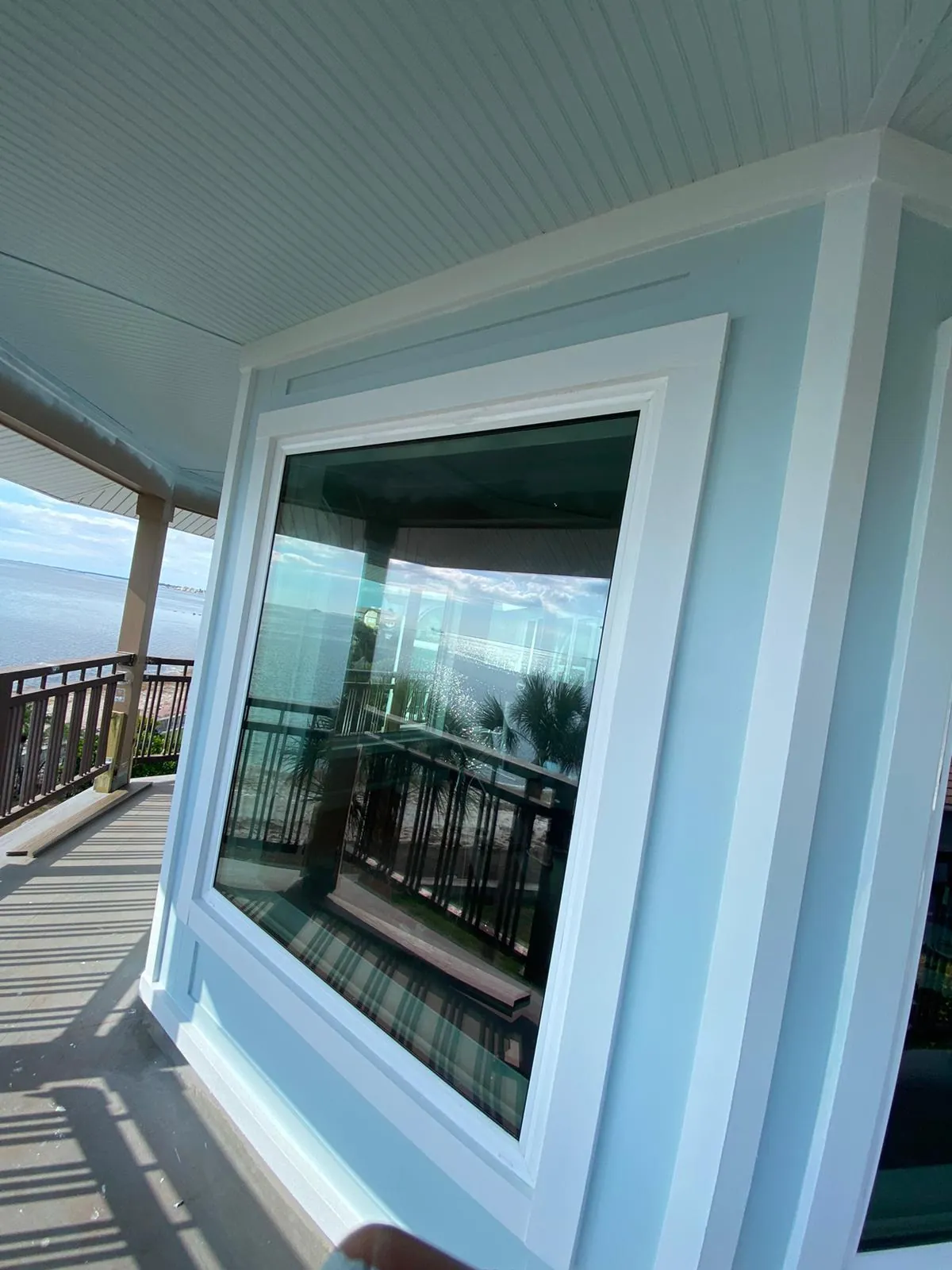
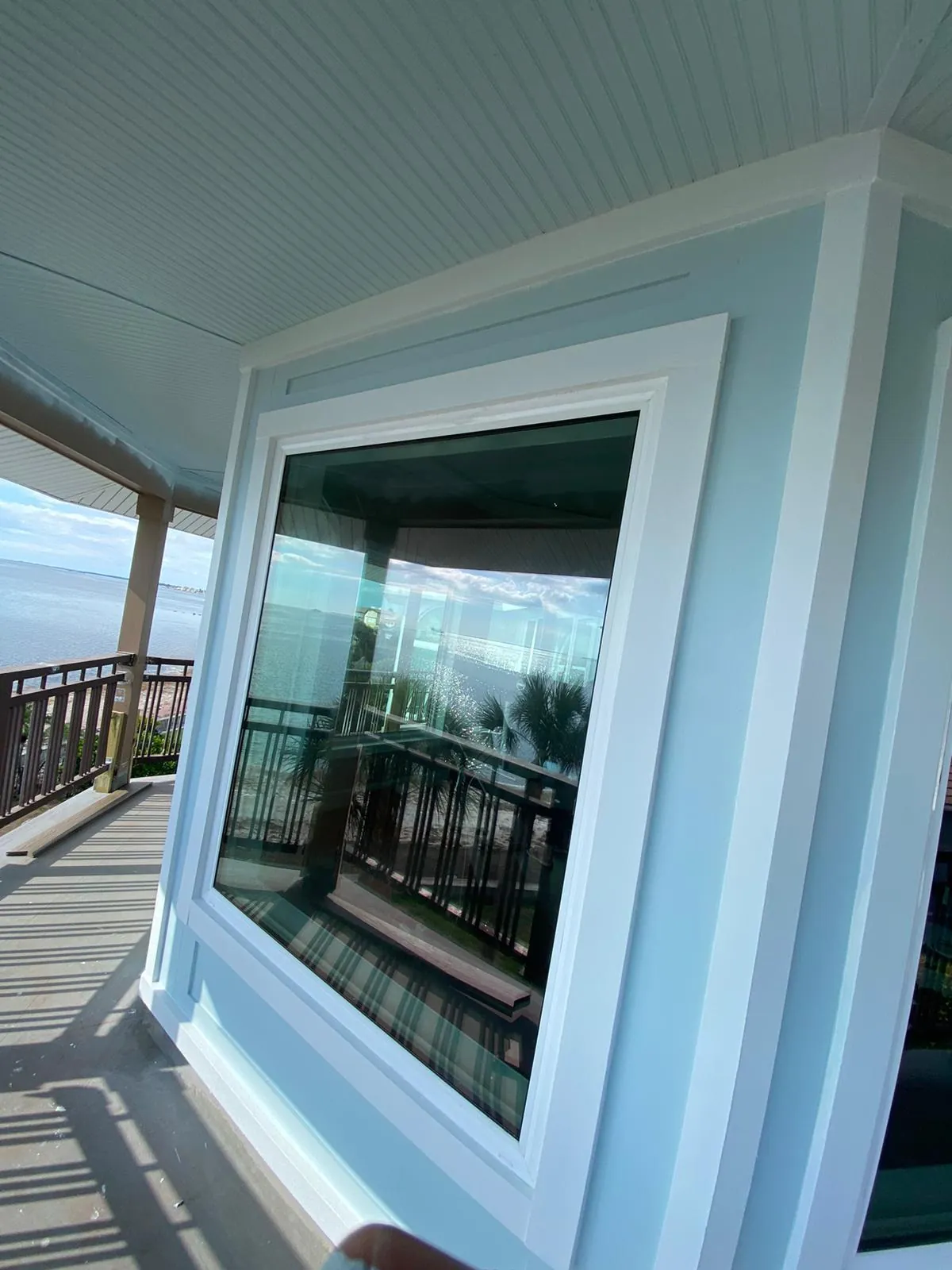
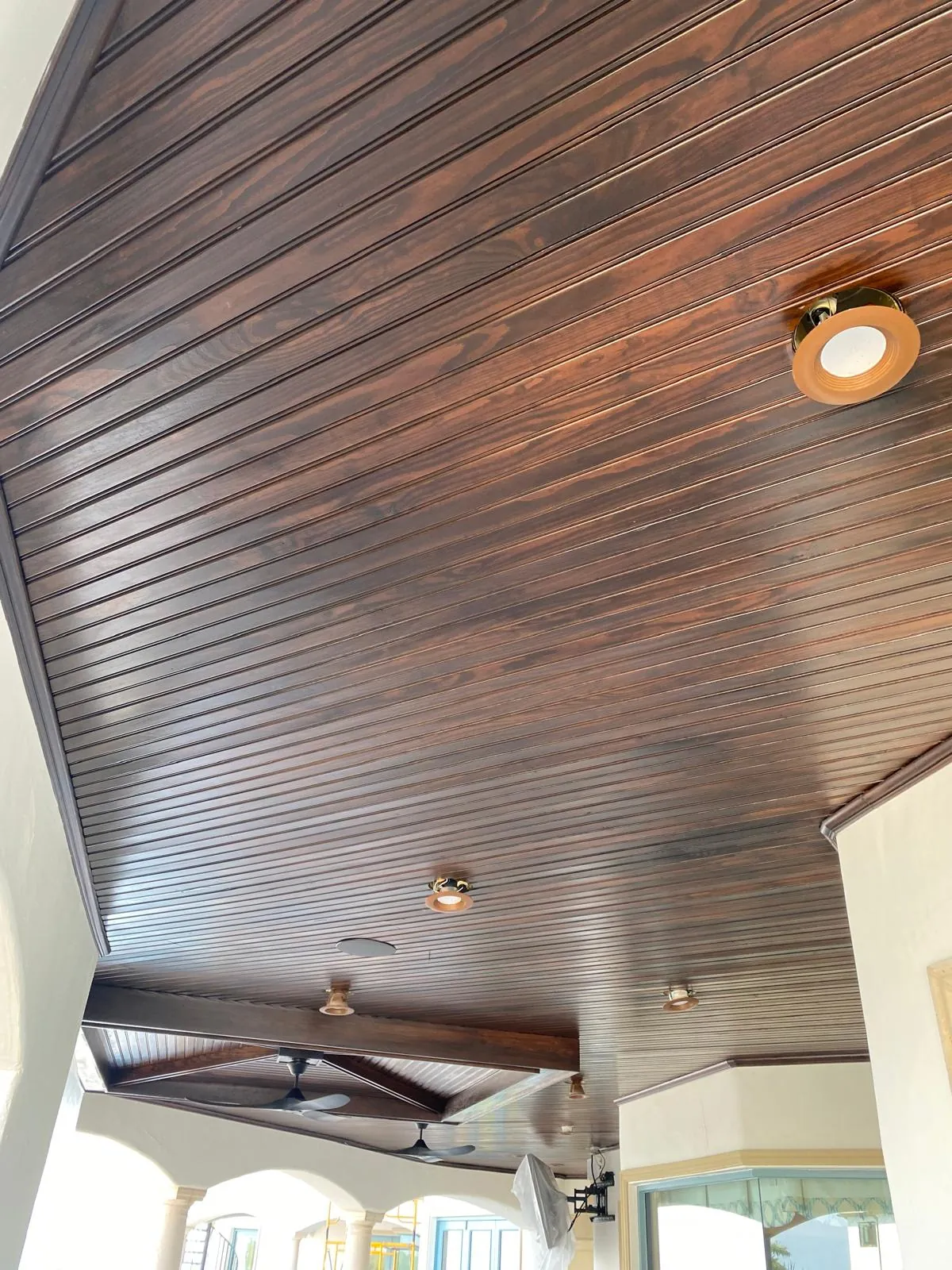
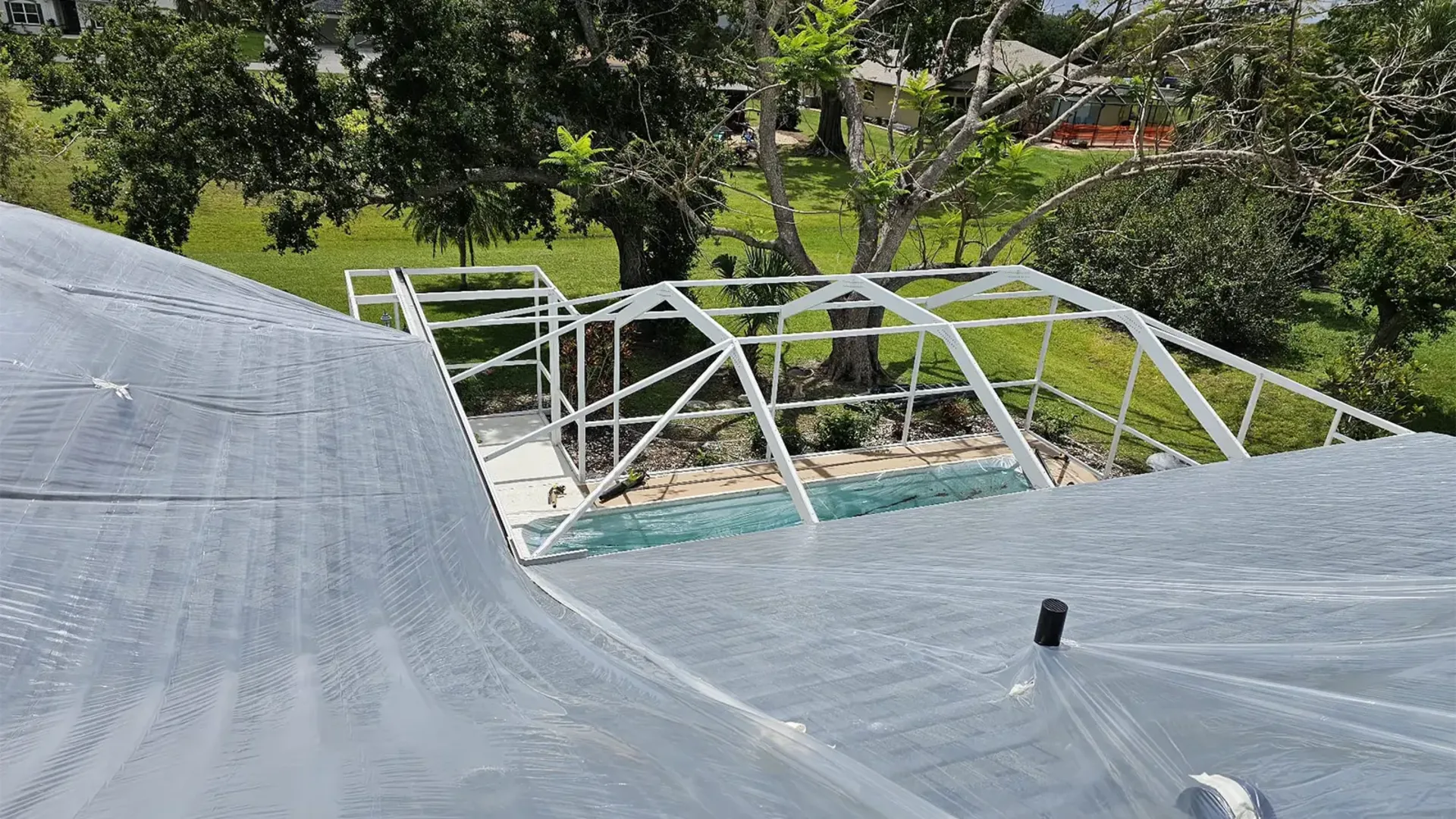
Recent pool cage and patio painting projects
How Do We Prepare a Pool Cage for Painting?
Pool cage preparation is more labor-intensive than most homeowners expect, and it is the most important factor in determining how long the new coating lasts. Cutting corners on prep is the number one reason pool cage paint jobs fail early. Our preparation follows a strict sequence:
Step 1: Screen Removal
All screen panels are carefully removed and cataloged by position. Screen spline (the rubber gasket holding screens in channels) is inspected. if it is brittle, cracked, or compressed, we recommend replacement during reinstallation. Removing screens gives us full access to every frame member, joint, and fastener point, which is impossible to properly prep with screens in place.
Step 2: Pressure Washing
The entire cage structure is pressure washed at 1,500 to 2,000 PSI, lower than stucco washing because aluminum is softer and can be dented by excessive pressure. We pay special attention to joints, cross-member intersections, and the top horizontal members where bird droppings, tree sap, and organic matter accumulate. Mildew-prone areas receive a pre-treatment with sodium hypochlorite solution.
Step 3: Rust Treatment and Surface Preparation
This is where pool cage painting diverges completely from standard exterior painting. Every fastener point, joint, and area of visible oxidation is individually addressed:
- Surface rust is removed by wire brush, sanding, or abrasive pad to expose clean metal.
- Existing screws with rust halos are replaced with stainless steel fasteners that resist galvanic corrosion.
- Treated areas receive a rust-converting primer that chemically transforms remaining iron oxide into a stable, paintable surface.
- The entire cage frame is wiped down with denatured alcohol to ensure paint adhesion, removing invisible oils, residues, and chalking that pressure washing alone cannot eliminate.
On a typical pool cage, rust treatment and surface prep takes one full day of focused labor. On heavily corroded cages, it can take two days. This is not a step we rush.
Step 4: Masking
Pool decks, pavers, pool equipment, outdoor furniture, and any adjacent stucco surfaces are masked to prevent overspray. Pool water is protected with tarps when spraying areas directly above the pool.
What Type of Paint Goes on a Pool Cage?
Pool cages require a fundamentally different coating than what goes on stucco, wood, or most other exterior surfaces. We use Direct-to-Metal (DTM) coatings specifically formulated for aluminum in high-moisture, chemical-exposure environments:
- DTM Acrylic: Our standard specification is Sherwin-Williams Pro Industrial DTM Acrylic, a water-based coating that provides excellent adhesion to aluminum, resists UV degradation, and offers good chemical resistance to pool chemicals. It dries quickly. critical in Florida's afternoon rain pattern, and allows recoat in 4 hours.
- DTM Alkyd/Urethane: For cages with heavy rust history or in particularly aggressive environments (saltwater pools, homes very close to the coast), we may specify an alkyd-modified DTM with urethane reinforcement for superior corrosion resistance and hardness.
Both products are applied by HVLP spray equipment, which atomizes the coating into a fine, even mist that wraps around all sides of cage members, including the backsides that are impossible to reach with a brush or roller. We apply two full coats to build sufficient film thickness for long-term protection.
What Is the Difference Between Pool Cage Painting and Rescreening?
These are complementary but different services. Painting addresses the aluminum frame, restoring its appearance and protecting it from corrosion. Rescreening addresses the mesh panels that keep insects out. Most homeowners who invest in pool cage painting also consider rescreening if their existing screens are discolored, torn, or sagging.
If the mesh is torn, stained black, or pulling out of the spline, a screen company installs new mesh after the coating has cured. Westchase Painting Company does not install screen. Sound screen can stay if it is masked and only the frame needs paint.
The order of that work, and the published ranges, are on pool cage restoration in Tampa.
How Does Pool Cage Painting Affect Home Value?
In the Tampa Bay real estate market, pool cage condition significantly impacts buyer perception and home value. According to local real estate professionals, a stained, oxidized, or rusted pool cage is one of the top five exterior deficiencies that buyers flag during showings. Conversely, a freshly painted pool cage with clean screens creates an immediate impression of a well-maintained home.
For homeowners planning to sell within the next 2 to 3 years, pool cage painting offers one of the highest returns on investment of any exterior improvement. a $2,000 to $4,000 investment that can influence buyer perception and offer price by $5,000 to $10,000 or more, particularly in communities like Westchase and South Tampa where outdoor living spaces are a primary selling feature.
Can You Paint a Pool Cage While the Pool Is in Use?
We recommend that the pool not be used during the painting process, which typically takes 2 to 4 days. Pressure washing sends debris into the pool water, and paint overspray (even with careful masking) can contaminate the water surface. Most homeowners simply plan the project during a period when pool use is not needed.
After painting is complete and all screens are reinstalled, the pool can be used normally. We ensure all masking is removed, the deck area is cleaned, and any paint overspray on the pool deck is addressed before we leave the job.
What About Lanai and Patio Enclosures?
Not all screen enclosures in Tampa Bay cover a pool. Many homes have lanai enclosures, patio screen rooms, or covered outdoor living areas with aluminum frames. These structures receive the same preparation and painting treatment as pool cages, though they may not face the additional challenge of chlorine exposure. The pricing is typically lower because there is less rust treatment required.
Whether you have a pool cage, lanai, or patio enclosure, the aluminum frame needs the same DTM coating system and thorough preparation to look good and last.
How Do We Handle Two-Story Pool Cages?
Many homes in Wesley Chapel, New Tampa, and Westchase have two-story pool cages that reach 20 to 25 feet in height. These structures require scaffolding or specialized ladders to safely access upper members for preparation and painting. We factor this access requirement into our estimates and schedule.
Two-story cages also tend to have more rust on upper members because rainwater cascading from the roof introduces additional moisture and debris into top joints and fastener points. Our preparation time on two-story cages is typically 30 to 50% longer than single-story enclosures of similar square footage.
For a deep dive into costs, coatings, preparation steps, timing, and HOA considerations, read our complete guide to pool cage painting in Florida.
Ready to restore your pool cage? Contact Westchase Painting Company at (813) 320-8710 or request a free estimate online. We serve Tampa Bay homeowners in Westchase, Carrollwood, Odessa, Lutz, and surrounding communities.