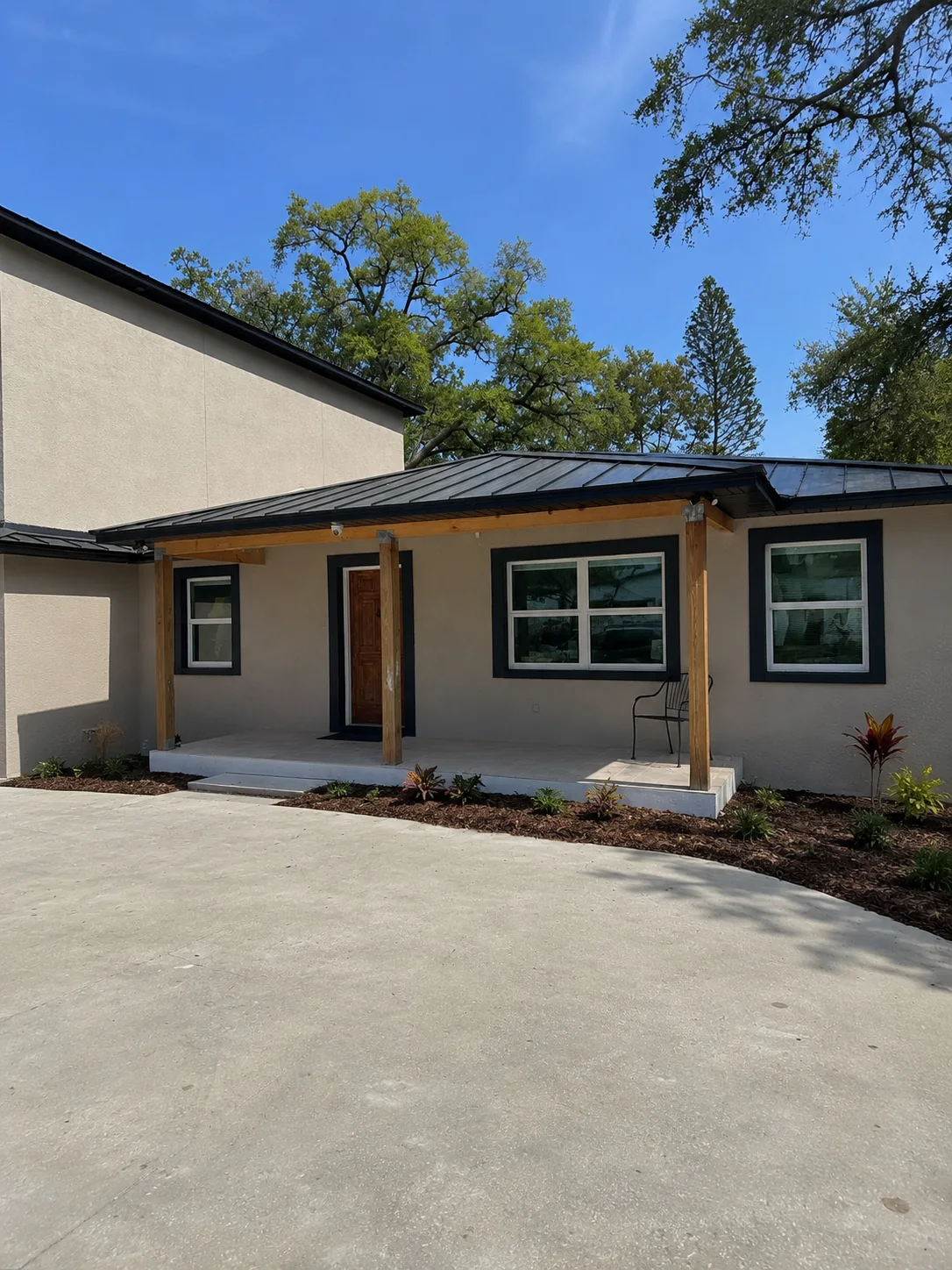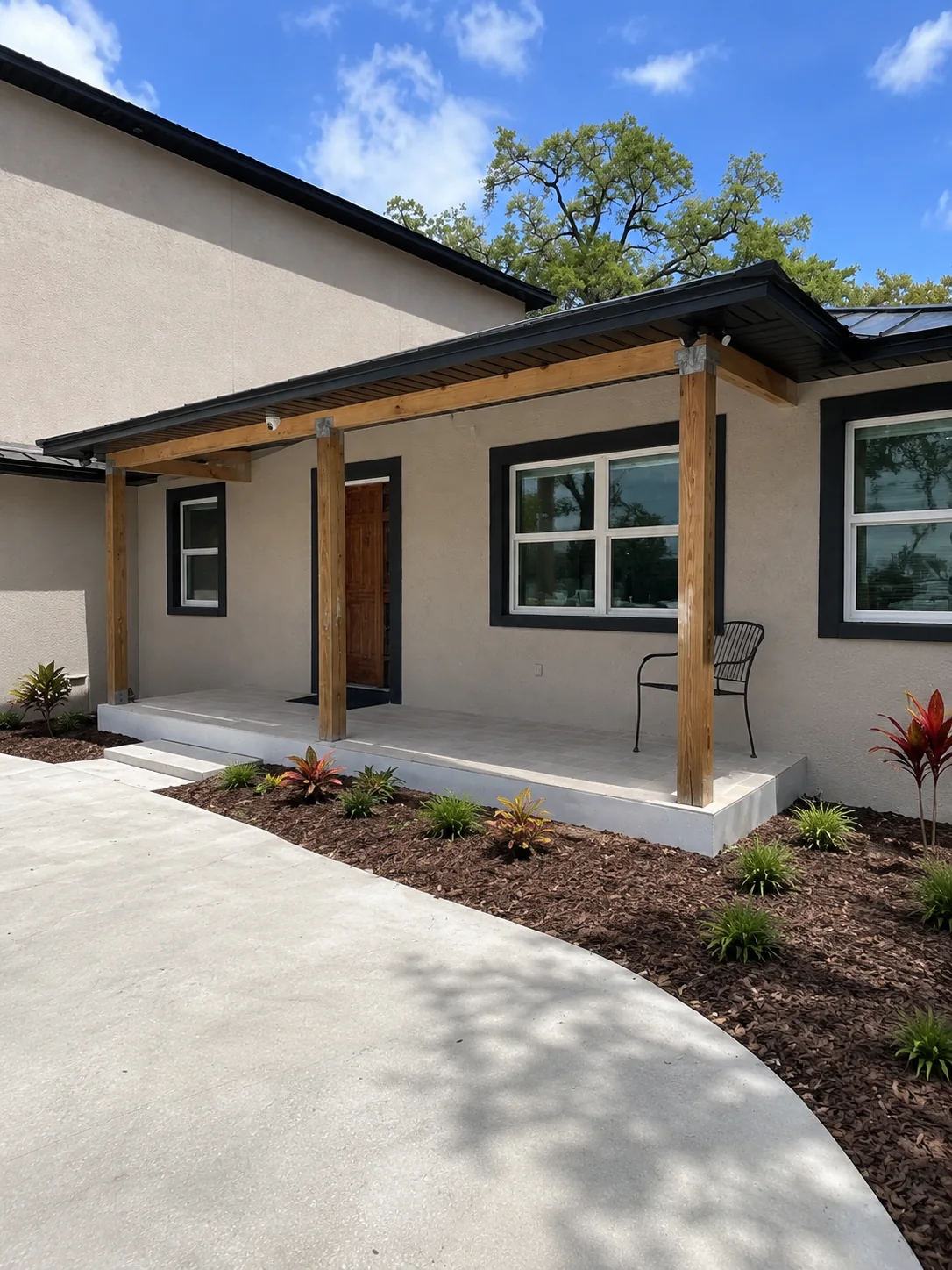
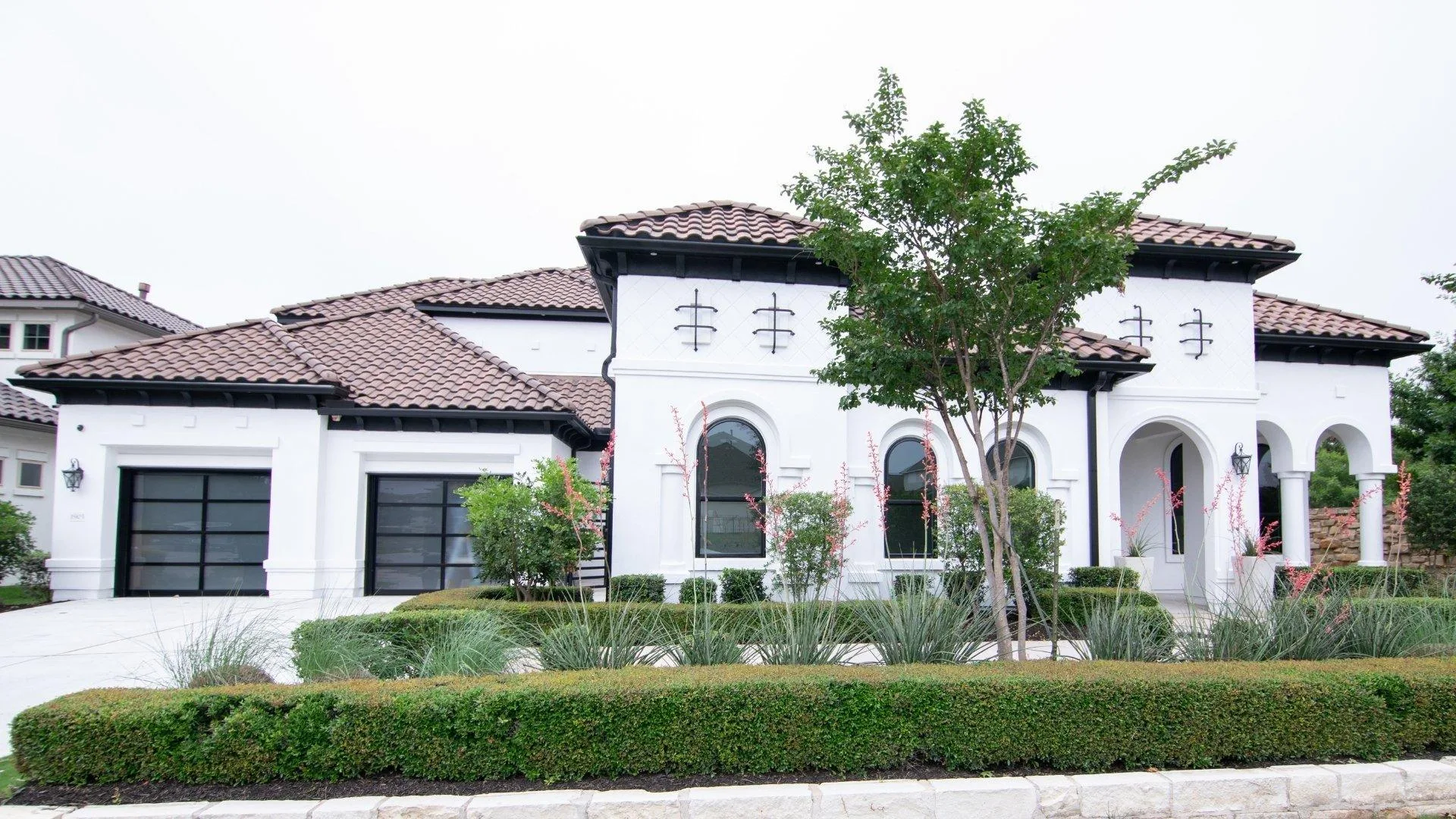
Over 80% of homes in the Tampa Bay area have stucco exteriors, making stucco painting the single most common exterior painting project in our region. But stucco is not drywall. it is a cementitious material that expands, contracts, absorbs moisture, and develops hairline cracks under Florida's extreme climate swings. Painting stucco correctly requires specific materials, preparation techniques, and application knowledge that generic "exterior painting" does not cover.
Westchase Painting Company has painted hundreds of stucco homes across Westchase, Carrollwood, Citrus Park, and throughout Tampa Bay. Every stucco project we take on follows a documented process specifically designed for Florida's cementitious exterior surfaces, not a modified version of what works on wood siding or brick.
Why Does Stucco Require Specialized Painting?
Stucco is a porous, cement-based material that behaves fundamentally differently from wood, vinyl, or fiber cement siding. According to the Portland Cement Association, stucco absorbs moisture at a rate of 15 to 20% of its dry weight, which means it is constantly taking in and releasing water vapor, especially in Tampa Bay where average relative humidity hovers around 74% year-round.
This moisture cycling creates three problems that standard exterior paints cannot solve on their own:
- Efflorescence: Mineral salts migrate to the surface as moisture evaporates, creating white powder deposits that push paint films off the surface. Tampa stucco homes with poor drainage or sprinkler overspray are particularly vulnerable.
- Alkalinity burn: Fresh or recently patched stucco has a pH of 12 to 13, highly alkaline. Standard paints applied too soon or without proper primer will chemically degrade within months, losing color and adhesion.
- Thermal cracking: Stucco in direct Florida sun can reach surface temperatures of 150°F or higher. When evening thunderstorms drop the temperature 30 to 40 degrees in minutes, the resulting contraction creates hairline cracks that propagate over time.
Understanding these three mechanisms is what separates a stucco painting specialist from a general exterior painter. Our preparation, primer selection, and topcoat specification all address these specific failure modes.
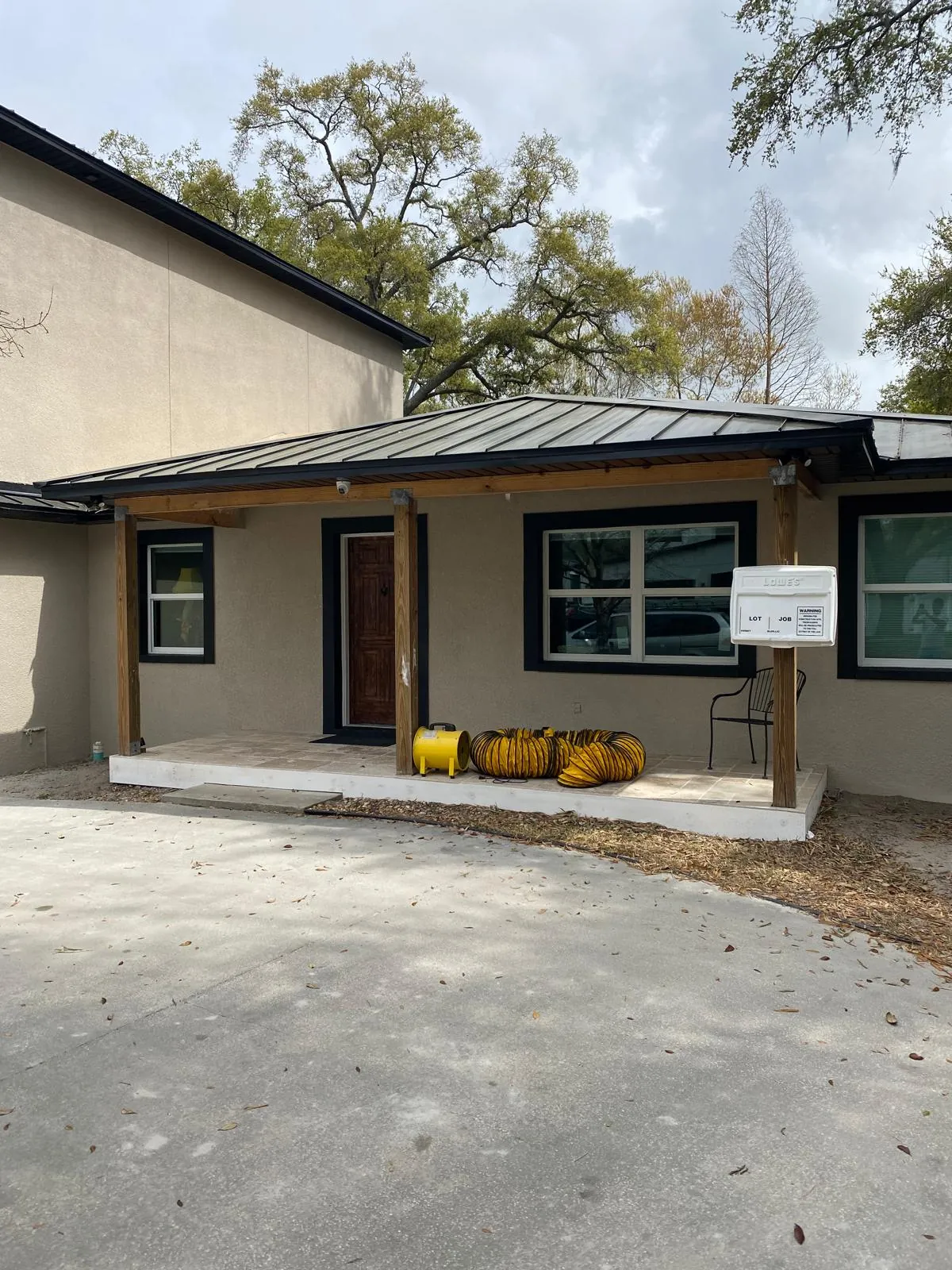
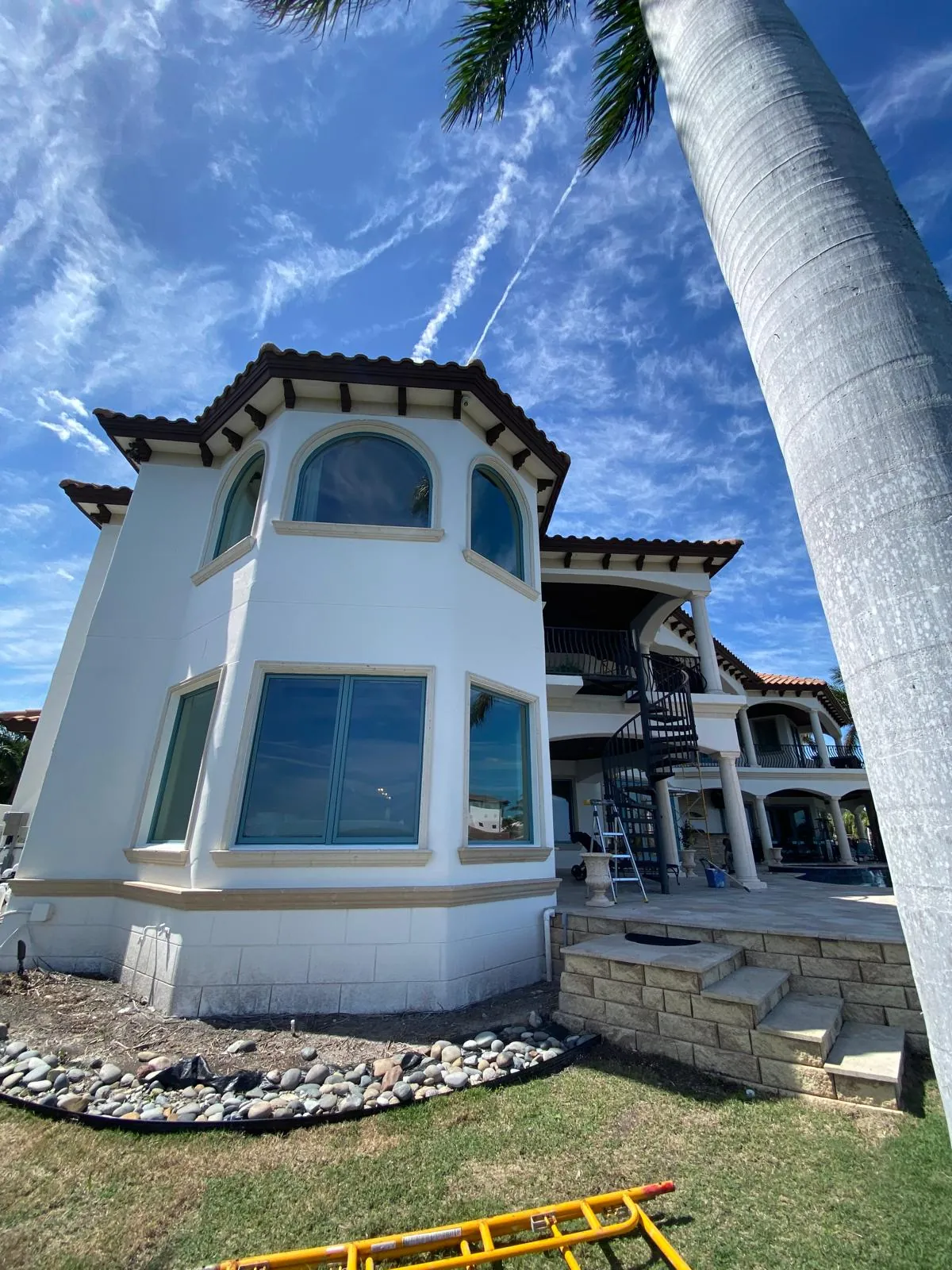
Recent stucco painting projects in the Tampa Bay area
How Do We Prepare Stucco for Painting in Tampa?
Preparation accounts for roughly 60% of the total labor on a stucco paint job, and it is the single biggest factor determining how long the finish lasts. Skipping or rushing prep is the number one reason stucco paint jobs fail prematurely in Florida. Our preparation process includes five distinct stages:
Stage 1: Inspection and Damage Assessment
Before we touch a pressure washer, we walk the entire exterior with the homeowner. We document every crack, stain, area of mildew growth, and any sections where previous paint is peeling or bubbling. Cracks are categorized by width: hairline (under 1/16 inch), moderate (1/16 to 1/4 inch), and structural (over 1/4 inch). This assessment determines the materials, timeline, and cost of the project.
Stage 2: Pressure Washing
We pressure wash all stucco surfaces at 2,500 to 3,000 PSI using a 25-degree tip, maintaining a consistent 12 to 18 inch distance from the surface. For heavy mildew or algae growth, common on north-facing walls and under eaves in Tampa. we pre-treat with a sodium hypochlorite solution (pool shock diluted to 3%) and allow it to dwell for 10 to 15 minutes before washing. This kills mildew at the root rather than just removing surface discoloration.
After washing, we allow a minimum of 24 hours drying time. On homes with heavy shade or during Tampa's summer rainy season, we may extend this to 48 hours. Painting over stucco with elevated moisture content is one of the most common causes of paint blistering and peeling.
Stage 3: Crack Repair and Patching
Hairline cracks are filled with a flexible, paintable acrylic caulk rated for exterior masonry use. Moderate cracks receive elastomeric patching compound that is tooled flush with the surrounding texture. When possible, we match the existing stucco texture so repairs are invisible after painting. For homes in Westchase subdivisions where HOA standards are strict, invisible crack repair is especially important.
Stage 4: Masking and Protection
All windows, doors, light fixtures, house numbers, security cameras, and landscape features within the spray zone are masked with plastic sheeting and painter's tape rated for exterior UV exposure. We use 3M ScotchBlue Exterior tape which withstands Florida sun for up to 14 days without leaving adhesive residue. a critical detail that cheaper tapes fail at in Tampa's heat.
Stage 5: Priming
Not every stucco repaint requires a full primer coat, but many do. We prime whenever: the existing paint is chalking heavily, bare stucco is exposed from crack repairs, efflorescence has been treated, or we are making a dramatic color change. Our standard stucco primer is an alkali-resistant, penetrating masonry primer that bonds to both the cementitious surface and the topcoat.
What Coatings Do We Use on Tampa Stucco?
The coating system we specify depends on the condition of the stucco and the homeowner's priorities. We primarily use two categories:
100% Acrylic Latex (Standard)
For stucco in good condition with minimal cracking, a premium 100% acrylic latex with UV inhibitors and mildewcides provides excellent protection for 5 to 7 years. We typically apply two full coats at 350 to 400 square feet per gallon to build a film thickness of 4 to 5 mils. Products we use include Sherwin-Williams SuperPaint Exterior Acrylic and Duration, both of which carry a limited lifetime warranty from the manufacturer.
Elastomeric Coatings (Premium)
For stucco with a history of cracking, homes over 15 years old, or homeowners who want the longest-lasting protection, we recommend elastomeric coatings. These products build a film thickness of 10 to 20 mils, three to four times thicker than standard paint, and can stretch up to 300% without cracking. This means they bridge existing hairline cracks and accommodate future thermal movement without splitting.
Elastomeric coatings cost approximately 30 to 40% more than standard acrylic but can extend the repaint cycle to 8 to 10 years on well-prepared stucco. For many South Tampa and Carrollwood homeowners, the longer life cycle makes the investment worthwhile.
How Does Florida's Climate Specifically Affect Stucco?
Tampa Bay presents a unique combination of climate stressors that are harder on stucco than almost any other region in the continental United States:
- UV exposure: The Tampa Bay area receives approximately 2,900 hours of sunshine annually, with UV index values regularly reaching "extreme" (11+) from April through October. This degrades paint resin bonds and causes color fading, particularly on south and west-facing walls.
- Humidity: Average relative humidity of 74% means stucco rarely fully dries out during summer months. This sustained moisture creates ideal conditions for mildew colonization, which can establish itself under paint films if the surface was not properly treated before painting.
- Rain intensity: Tampa receives an average of 52 inches of rain annually, with most falling in intense afternoon thunderstorms from June through September. This driving rain tests the waterproofing capability of stucco coatings far more aggressively than gentle, steady rainfall.
- Thermal cycling: Stucco surfaces in direct sun can exceed 150°F at midday and drop below 80°F overnight. a 70+ degree swing that causes continuous expansion and contraction. Over years, this cycling creates networks of hairline cracks.
These factors combine to make proper stucco painting in Tampa Bay a fundamentally different job than stucco painting in Arizona, California, or anywhere else with stucco homes but different climate stressors.
What Are Common Stucco Painting Mistakes in Florida?
Through inspecting hundreds of stucco paint failures across Tampa Bay, we have identified the most common mistakes that lead to premature coating failure:
- Painting over mildew: The number one failure mode. If mildew is not killed at the root before painting, it grows underneath the new paint film and causes widespread peeling within 6 to 12 months. Pressure washing alone without a mildewcide pre-treatment does not fully eliminate the problem.
- Insufficient drying time: Painting stucco with moisture content above 15% causes blistering. In Tampa's humid summer months, 24 hours after pressure washing is often not enough, especially for shaded walls. We use a moisture meter to verify readiness before painting begins.
- Wrong product selection: Using interior paint, flat architectural paint, or coatings without UV stabilizers on stucco in Tampa is a recipe for failure within 2 to 3 years. We have seen DIY and budget painter jobs where the paint was visibly chalking within the first year.
- Skipping primer on bare patches: Wherever stucco is exposed, from crack repair, previous peeling, or new construction, an alkali-resistant primer is essential. Bare stucco has a pH of 12 to 13, which chemically attacks standard topcoats and causes "burn through", loss of color and adhesion at those specific spots.
- One coat application: A single coat on stucco, even with a premium product, builds insufficient film thickness to withstand Florida's UV intensity. Two full coats are the minimum professional standard for stucco in our climate.
What About Stucco Color Selection for HOA Communities?
Many of the communities we serve, including Westchase, Carrollwood Village, and New Tampa master-planned neighborhoods, have Homeowners Association architectural review requirements for exterior color changes. We are familiar with the color palettes approved by most Westchase subdivisions and can help you select colors that will pass architectural review without delays.
If you are planning a color change rather than a repaint in the same color, we recommend submitting your colors to your HOA's architectural review committee at least 2 to 3 weeks before your scheduled start date. We provide large brush-out samples on your actual stucco so you can see how colors look in Tampa's intense natural light before committing, colors that look soft in a paint store can appear significantly brighter on a sun-drenched stucco wall.
Our color consultation service is available for homeowners who want professional guidance on exterior stucco color selection, including body, trim, and accent color coordination.
How Does Stucco Painting Differ from Other Exterior Surfaces?
Tampa Bay homes often combine stucco with other exterior materials, wood fascia, aluminum soffits, concrete block foundations, and vinyl or aluminum window frames. A complete exterior painting project typically involves all of these surfaces, but each requires different preparation and products:
- Stucco vs. wood: Wood requires sanding, sometimes stripping, and wood-specific primers. Stucco requires crack repair, alkali-resistant primers, and coatings that can breathe, allowing moisture vapor to escape. Using a wood-specific product on stucco (or vice versa) leads to premature failure.
- Stucco vs. concrete block: Concrete block is also cementitious but has joints and a more porous structure. Block walls often benefit from block filler primer before topcoating, while stucco rarely needs this step.
- Stucco vs. aluminum/vinyl: Aluminum soffits and fascia require bonding primers designed for non-porous surfaces. Attempting to paint these with the same product used on stucco results in peeling, usually within the first year.
When we paint a complete home exterior, we specify different products for each surface type. This is more time-intensive than using one product for everything, but it is the only way to ensure every surface gets appropriate protection.
What Is Included in Our Stucco Painting Estimate?
Every stucco painting estimate we provide includes the following, itemized clearly so there are no surprises:
- Full exterior pressure wash with mildew pre-treatment
- Crack repair, hairline and moderate cracks (structural cracks quoted separately if needed)
- Masking of all windows, doors, fixtures, and landscape features
- Primer where needed (bare stucco, heavy chalk, major color change)
- Two full coats of specified exterior coating (product name and sheen listed on estimate)
- Clean-up and removal of all masking materials
- Written warranty on labor and workmanship
We do not bury costs in vague line items. If your stucco needs more than standard crack repair, we identify and quote that separately during our estimate visit. We want you to understand exactly what the project involves before any work begins.
Ready to get your stucco home professionally painted? Call us at (813) 320-8710 or request a free estimate online. We serve homeowners throughout Westchase, Odessa, Lutz, Wesley Chapel, and the entire Tampa Bay area.