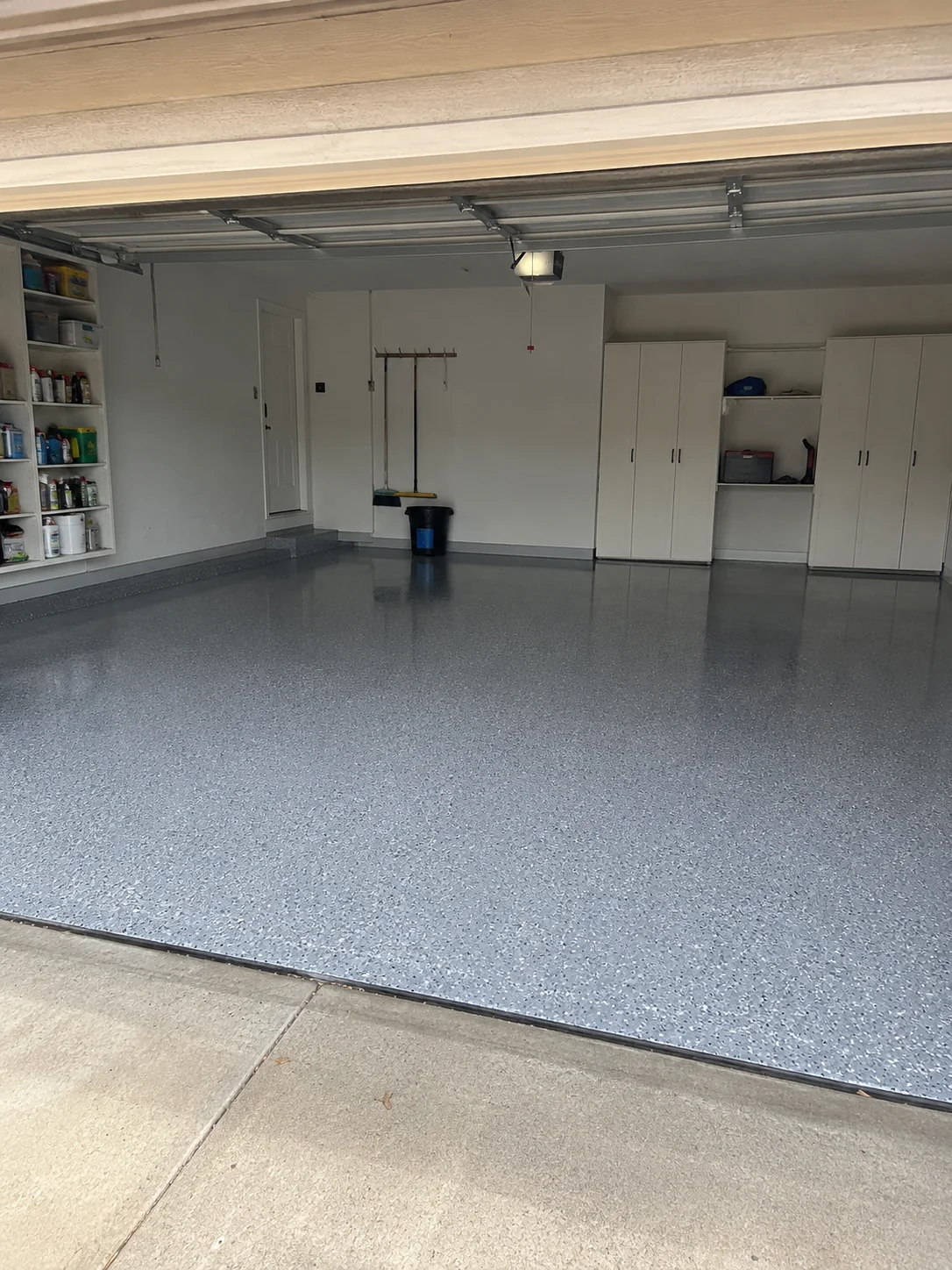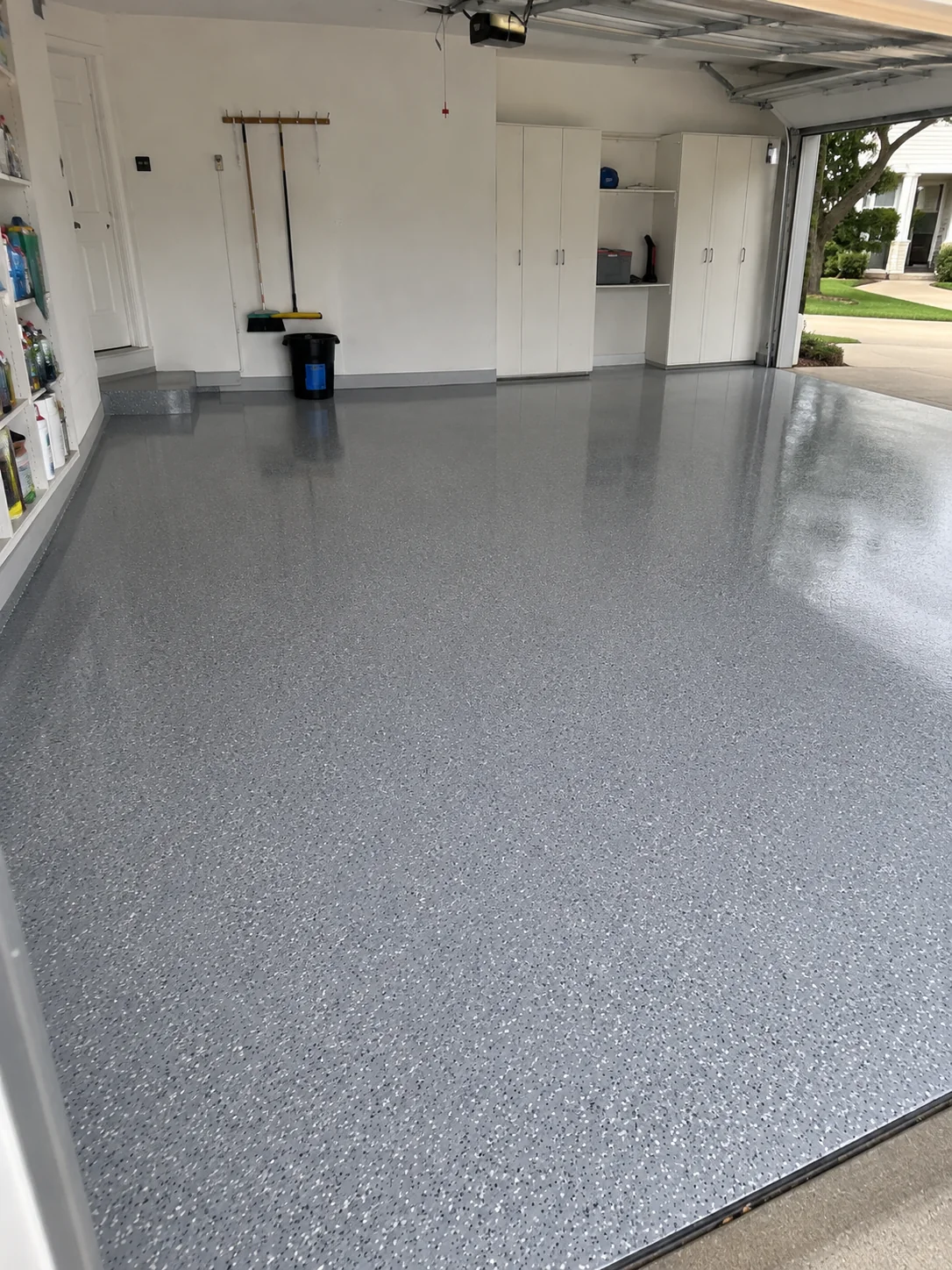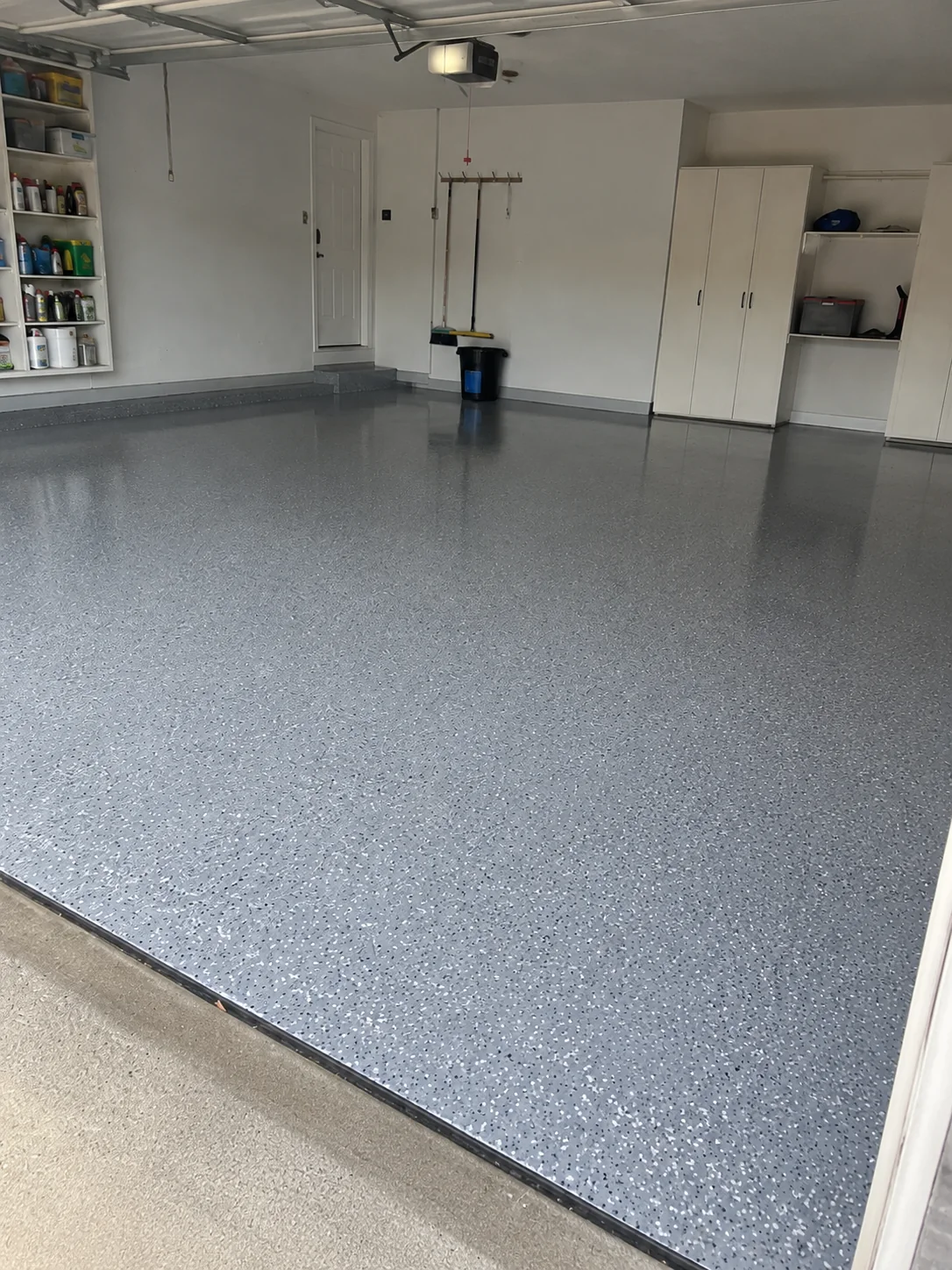
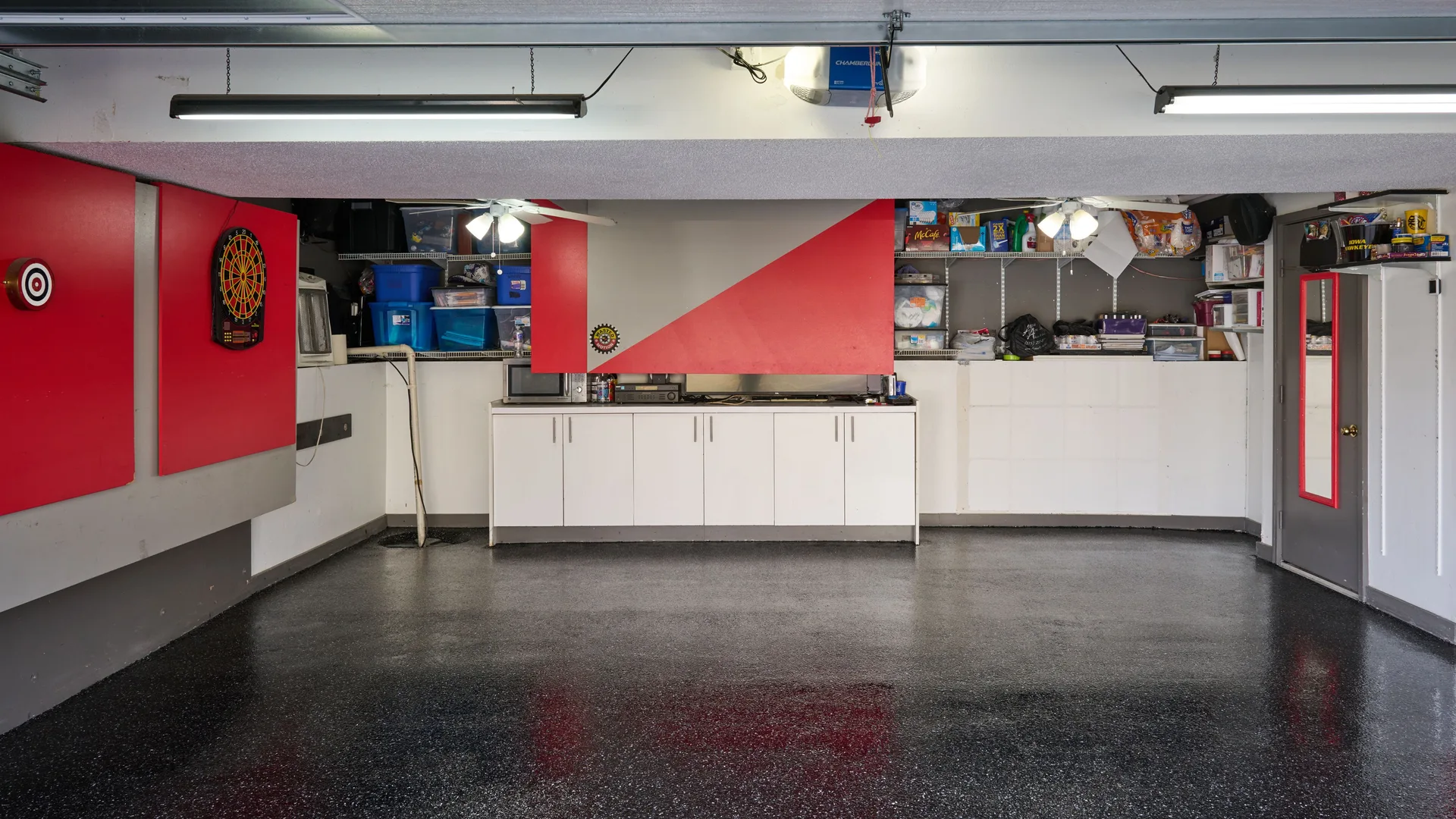
A garage floor coating does more than make your garage look better. it creates a durable, chemical-resistant, easy-to-clean surface that protects the concrete underneath from moisture penetration, oil stains, tire marks, and the general wear of daily use. In Tampa Bay, where humidity drives moisture through concrete slabs and hot tires stress floor surfaces year-round, a properly installed coating system is both a practical upgrade and a smart investment.
Westchase Painting Company provides professional garage floor coating services throughout Westchase, Carrollwood, New Tampa, and the greater Tampa Bay area. We install multi-layer coating systems, not the single-coat products sold at hardware stores that peel within months in Florida conditions.
Why Do DIY Garage Floor Coatings Fail in Florida?
If you have ever tried a DIY garage floor kit from a home improvement store and watched it peel, flake, or bubble within a few months, you are not alone. An estimated 70% of DIY garage floor coatings in Florida fail within the first two years. The reasons are specific and avoidable with professional installation:
- No concrete profiling: DIY kits instruct you to acid-etch the floor with muriatic acid. In Tampa's limestone-rich concrete, acid etching creates an inconsistent, too-smooth profile that coatings cannot properly grip. Professional diamond grinding creates a uniform CSP-2 to CSP-3 profile (Concrete Surface Profile measured by the International Concrete Repair Institute) that provides mechanical adhesion.
- Moisture vapor issues: Florida's high water table means many garage slabs transmit moisture vapor from below. This invisible moisture pushes coatings off the surface from underneath, causing bubbles and delamination. DIY kits do not test for or address this. We test every floor with a calcium chloride moisture test or digital meter before specifying the coating system.
- Wrong product for the climate: Many DIY kits use water-based epoxy formulations that cannot withstand the thermal cycling of a Florida garage floor. In summer, the concrete surface temperature can exceed 120°F when a car that has been baking in a parking lot pulls in. The tire contact patch creates intense, localized heat that pulls cheap coatings right off the surface. a phenomenon called "hot tire pickup."
- Insufficient film thickness: A single coat of DIY epoxy at 3 to 5 mils is simply not enough protection. Our systems build to 20 to 30 mils total film thickness across multiple layers, four to six times thicker than a DIY kit.
What Garage Floor Coating Systems Do We Offer?
We install three primary coating systems, each engineered for different performance levels and budgets:
System 1: High-Solids Epoxy (Good)
Our entry-level professional system uses a 100% solids epoxy base coat that builds significant film thickness in a single application. Unlike water-based DIY epoxies that are only 40 to 50% solids (the rest is water that evaporates and leaves a thin film), 100% solids epoxy puts down 100% of what you apply. This system includes:
- Diamond-ground concrete preparation
- 100% solids epoxy base coat (8 to 10 mils)
- Optional decorative vinyl flake broadcast
- Polyurethane clear topcoat (3 to 4 mils)
- Total system thickness: 12 to 16 mils
This system is ideal for homeowners who want a clean, durable garage floor at an accessible price point. Expected lifespan in a Tampa garage with daily vehicle use: 5 to 8 years.
System 2: Epoxy + Polyurea Hybrid (Better)
Our mid-range system combines the adhesion strength of epoxy with the UV stability and flexibility of polyurea. The epoxy base coat bonds to the concrete, while the polyurea topcoat provides superior resistance to UV yellowing, chemical spills, and hot tire pickup. This system includes:
- Diamond-ground concrete preparation
- Moisture-mitigating primer (if needed based on testing)
- 100% solids epoxy base coat (8 to 10 mils)
- Full-broadcast decorative flake (completely covers the base coat)
- Polyurea clear topcoat (5 to 6 mils)
- Total system thickness: 20 to 25 mils
This is our most popular system for Tampa Bay homeowners. The polyurea topcoat will not yellow from UV exposure, important for garages with windows or doors left open during the day. Expected lifespan: 8 to 12 years.
System 3: Full Polyaspartic/Polyurea (Best)
Our premium system uses polyaspartic and polyurea chemistry throughout for maximum durability, UV resistance, and the fastest return to service. This system can be applied in a single day because polyaspartics cure in hours rather than the 12 to 24 hours that epoxy requires between coats. It includes:
- Diamond-ground concrete preparation
- Moisture-mitigating primer
- Polyaspartic base coat (6 to 8 mils)
- Full-broadcast decorative flake
- Polyurea clear topcoat (6 to 8 mils)
- Total system thickness: 25 to 30+ mils
This system delivers the best resistance to chemicals (brake fluid, oil, gasoline, salt), the hardest surface, and the longest lifespan: 12 to 15+ years. It is the system we recommend for homeowners who use their garage as a workshop, have multiple vehicles, or simply want the longest-lasting option available.
How Do We Prepare a Garage Floor for Coating in Tampa?
Concrete preparation is not a suggestion. it is the foundation of every successful garage floor coating. Approximately 90% of coating failures can be traced to inadequate surface preparation. Our process includes:
Diamond Grinding
We use a walk-behind diamond grinder with industrial-grade diamond tooling to mechanically profile the concrete surface. This process removes the thin, weak layer of concrete cream (laitance) on the surface, opens the pores of the concrete, and creates a uniform profile that coatings can mechanically bond to. Diamond grinding is superior to acid etching in every measurable way. it creates a more consistent profile, does not leave chemical residue, and works on concrete of any age or hardness.
Crack and Joint Repair
Concrete cracks are filled with a flexible polyurea joint filler that bonds to both sides of the crack and can accommodate movement without re-cracking. Control joints (the intentional grooves cut into the slab) are filled flush with the surface so the finished floor has a seamless appearance. Spalled areas (where the concrete surface has chipped or flaked) are repaired with a cementitious patch compound and ground smooth.
Moisture Testing
Florida's high water table and limestone substrate create conditions where moisture vapor can transmit through concrete slabs at rates that cause coating failure. We test the slab using either a calcium chloride test (ASTM F1869) or a relative humidity probe (ASTM F2170) to determine moisture vapor emission rate. If the rate exceeds 3 lbs per 1,000 sq ft per 24 hours, we apply a moisture vapor barrier primer before the coating system.
What Design Options Are Available?
Garage floor coatings are not just functional. they can dramatically transform the look of your garage. We offer several design options:
- Solid colors: Clean, uniform color in any shade. Popular choices include medium gray, light gray, tan, and charcoal. Ideal for a minimalist, clean-shop look.
- Vinyl flake blends: Decorative flakes broadcast into the wet base coat create a multi-color, granite-like appearance that hides minor imperfections and dirt between cleanings. We carry over 30 flake blend options ranging from subtle earth tones to bold multi-color combinations.
- Metallic epoxy: Metallic pigments create a flowing, three-dimensional effect that mimics polished stone or marble. Each metallic floor is unique because the pigments self-level and swirl during application. This is a premium option popular with homeowners who use their garage as an extension of their living space.
- Quartz broadcast: Colored quartz granules provide an extremely durable, slip-resistant surface with a natural stone appearance. Quartz broadcast systems are the most abrasion-resistant option and are often used in commercial and industrial applications. For residential garages, they provide maximum durability.
How Does Florida's Climate Affect Garage Floor Coatings?
Tampa Bay's climate creates specific challenges for garage floor coatings that do not exist in cooler, drier regions:
- Hot tire pickup: Tires absorb heat from asphalt roads. In Tampa's summer, tire temperatures can reach 160°F or higher. When a car parks on a coated garage floor, the heat from the tires can soften inferior coatings, causing them to pull up when the car drives away. Our systems use hot-tire-resistant formulations tested to withstand temperatures above 200°F.
- Moisture vapor transmission: As described above, Florida's high water table drives moisture through concrete. Our testing and moisture mitigation protocols address this directly.
- Rain tracking: Tampa receives 52 inches of rain annually. Vehicles track significant water into the garage daily during the rainy season. All our coating systems include slip-resistant finishes and are formulated for wet-surface traction.
- Chemical exposure: Lawn chemicals, pool chemicals, and vehicle fluids are commonly stored and used in Tampa garages. Our coating systems resist gasoline, oil, brake fluid, chlorine, and common household chemicals without staining or degradation.
What About Garage Walls and Trim?
Many homeowners who invest in a garage floor coating also want to refresh the garage walls, ceiling, and trim to complete the transformation. We offer complete garage interior painting as part of a floor coating project. Common upgrades include:
- Painting drywall or block walls in a clean white or light gray to brighten the space
- Painting the ceiling and exposed joists/trusses
- Painting the garage door interior and entry door trim
- Painting exposed water heater enclosures and utility areas
Bundling garage wall painting with floor coating is more cost-effective than doing them as separate projects because we are already on-site with equipment and materials. Our interior painting team handles the walls and ceiling while our floor coating crew handles the floor, so both can proceed simultaneously.
Ready to transform your garage floor? Call Westchase Painting Company at (813) 320-8710 or request a free estimate online. We serve homeowners throughout Westchase, Carrollwood, South Tampa, New Tampa, and the entire Tampa Bay area.