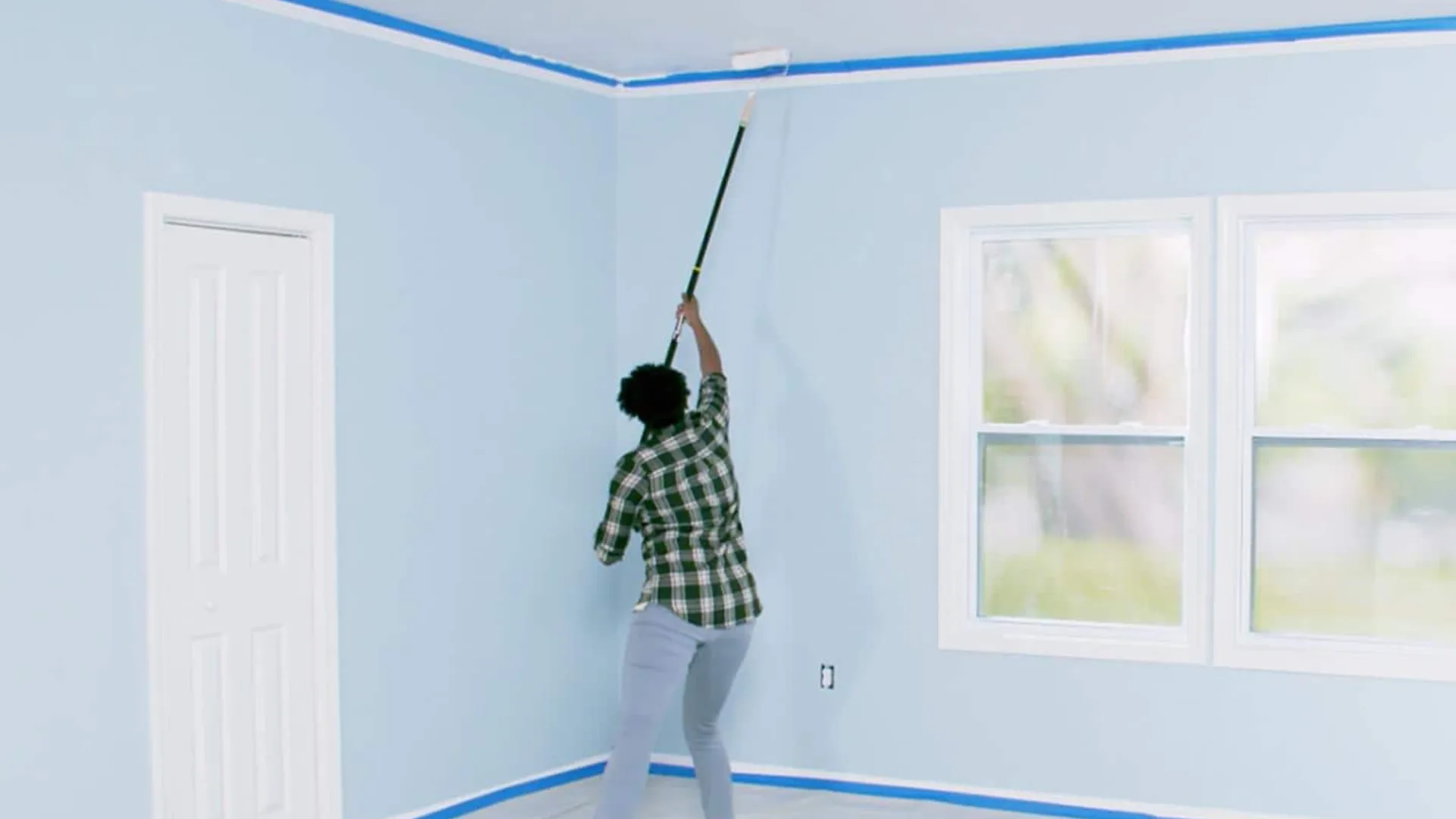
Ceilings are the most neglected painted surface in the average home. Homeowners repaint walls, update cabinet colors, and refresh trim regularly, but ceilings often go decades without attention. The result is a yellowed, stained, or dingy ceiling that makes even a freshly painted room feel tired. Professional ceiling painting is one of the highest-impact, most-overlooked interior improvements a Tampa Bay homeowner can make.
Westchase Painting Company provides dedicated ceiling painting services across Westchase, Carrollwood, South Tampa, and the entire Tampa Bay area. Ceiling painting is not just "painting up instead of sideways". it requires different techniques, products, and preparation than wall painting.
Why Do Ceilings Need Their Own Painting Approach?
Painting a ceiling is fundamentally different from painting a wall, and understanding why is important for getting results that look professional and last:
- Gravity works against you: Every drop of paint on a ceiling is fighting gravity. This means application technique, paint viscosity, and roller nap selection must be calibrated to prevent drips, runs, and uneven coverage. Ceiling paint formulations are thicker (higher viscosity) than wall paints specifically to resist dripping during application.
- Light reveals everything: Ceiling surfaces receive raking light from windows that exposes every lap mark, roller stipple pattern, and area of uneven coverage. A ceiling painted with wall paint or applied with poor technique will show visible track marks when natural light hits it at low angles, particularly in Florida homes with large windows and abundant natural light.
- Stains behave differently: Water stains, smoke discoloration, and nicotine yellowing on ceilings cannot be covered with standard latex paint. The stains bleed through within days to weeks. Specialized stain-blocking primers are required before topcoating, and the type of primer depends on the type of stain.
- Access and safety: Working overhead at any height increases fatigue and risk. Vaulted ceilings, two-story foyers, and stairwell ceilings require scaffolding, proper safety equipment, and techniques that most DIY painters and many general painters do not regularly practice.
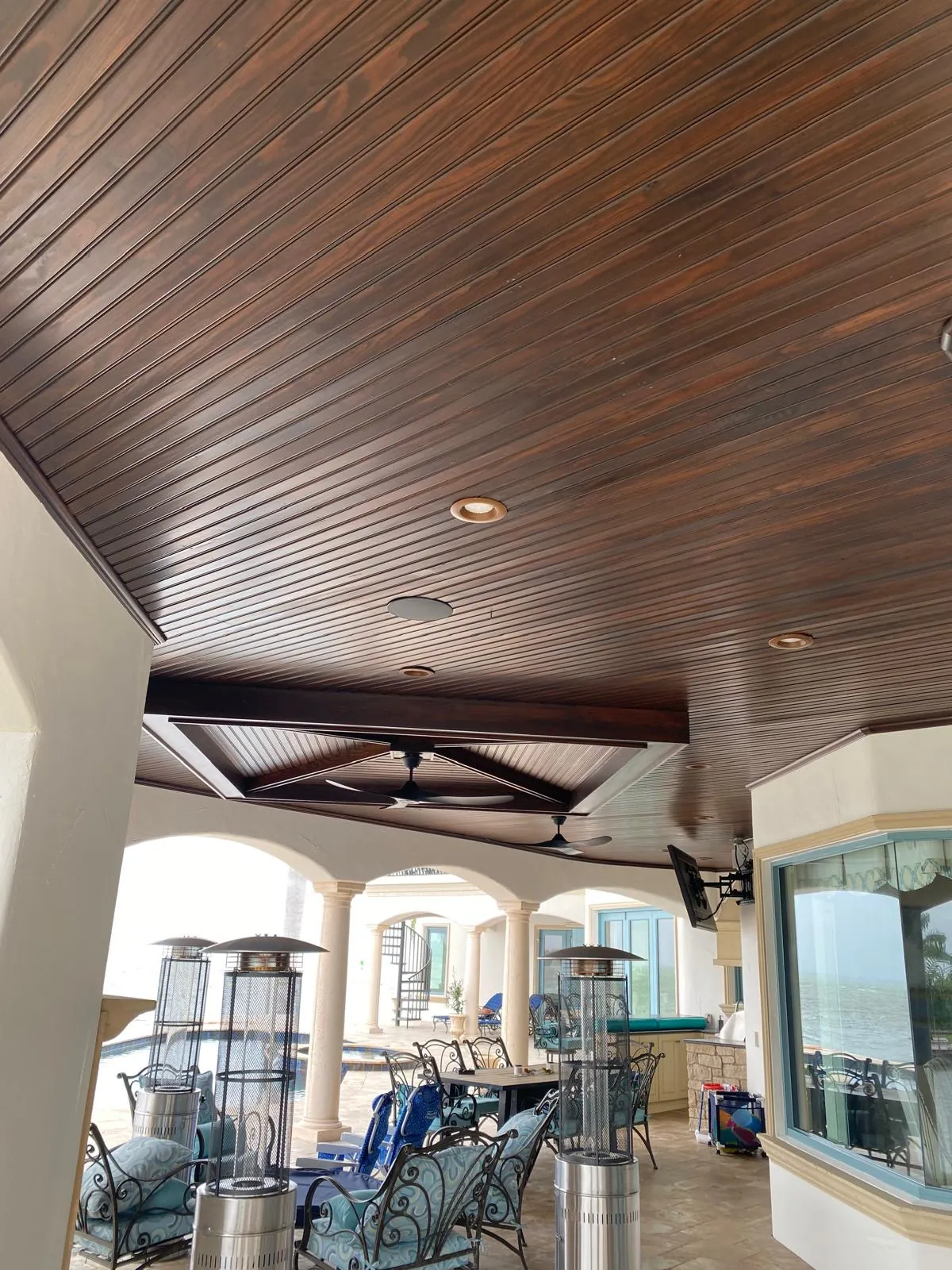
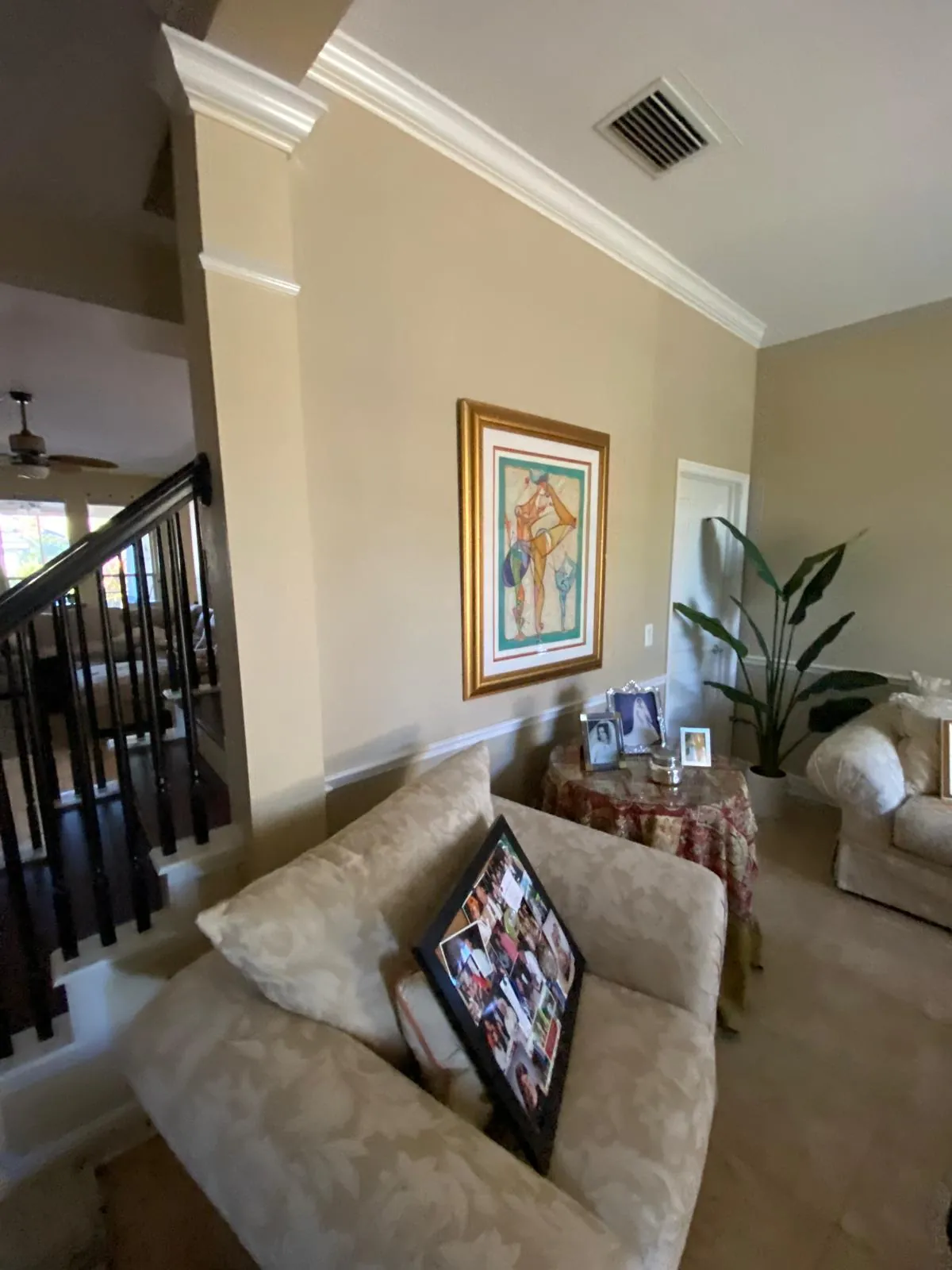
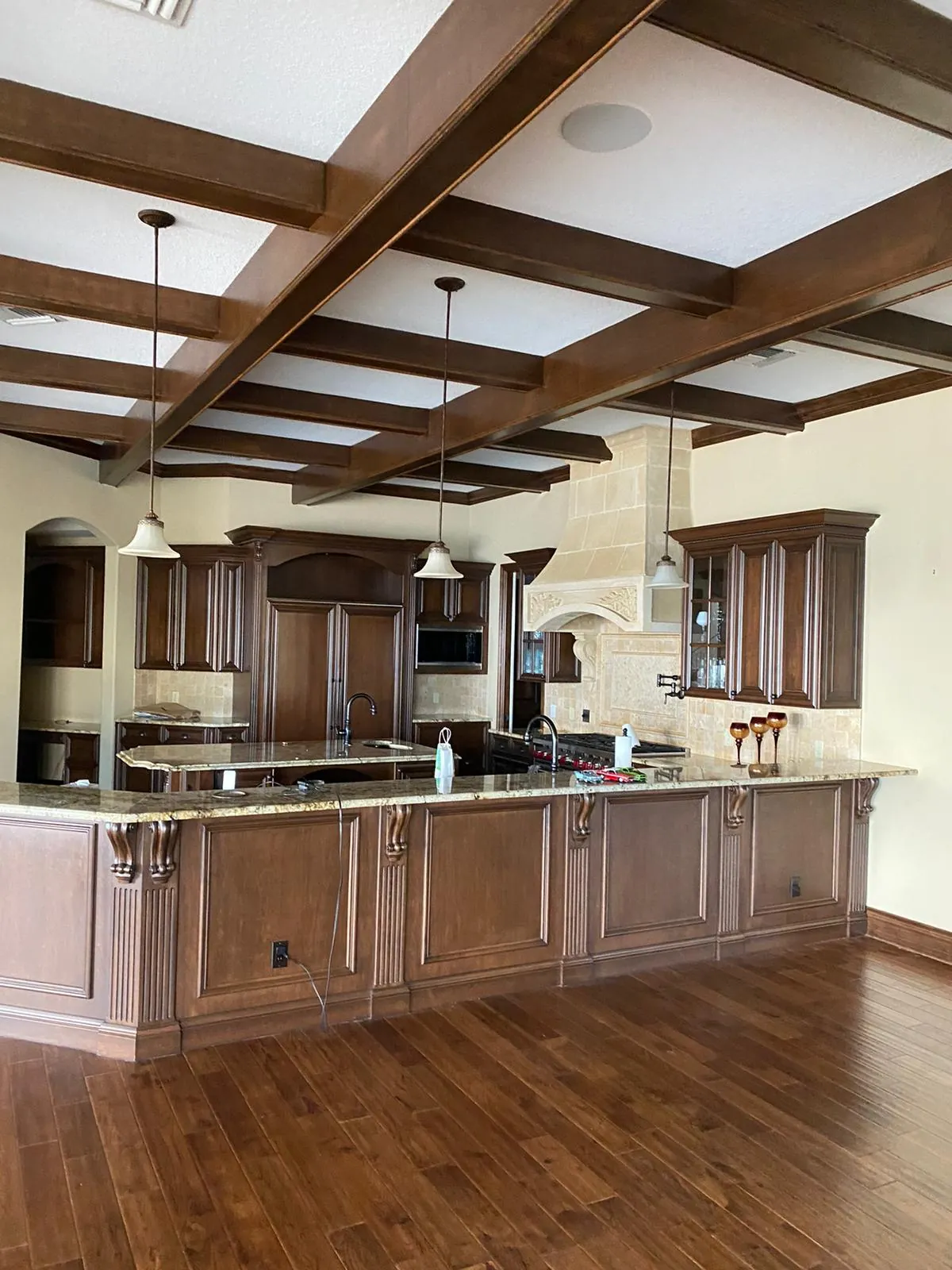
Recent ceiling and wood staining projects
What Types of Ceilings Do We Paint?
Tampa Bay homes feature a wide variety of ceiling types, and we have the equipment, experience, and techniques to paint all of them:
Flat Ceilings (Standard Height)
The most common ceiling type in Tampa Bay homes is a flat drywall ceiling at 8 to 10 feet. These ceilings are straightforward to paint but require proper technique to avoid visible lap marks and roller patterns. We use a systematic approach: cutting in the perimeter with a brush, then rolling in consistent overlapping passes using a 3/8-inch to 1/2-inch nap roller. Two full coats with the final coat applied in the same direction throughout the room ensures a uniform, streak-free finish.
Vaulted and Cathedral Ceilings
Vaulted ceilings are common in Westchase and New Tampa homes built in the 1990s and 2000s. These ceilings range from 12 to 25 feet at the peak and present access challenges that require scaffolding or specialized extension equipment. The angled surfaces also catch light differently than flat ceilings, making consistent coverage even more critical. We typically add one day to the project timeline for each room with a vaulted ceiling.
Tray Ceilings
Tray ceilings (also called recessed or inverted ceilings) feature a raised center section that creates a dimensional look. These are common in master bedrooms and dining rooms in Tampa Bay homes. Tray ceilings are excellent candidates for two-tone color treatment. a lighter color on the upper recessed section and a complementary color on the lower perimeter. We use careful masking at the transition line to create a sharp, clean break between colors.
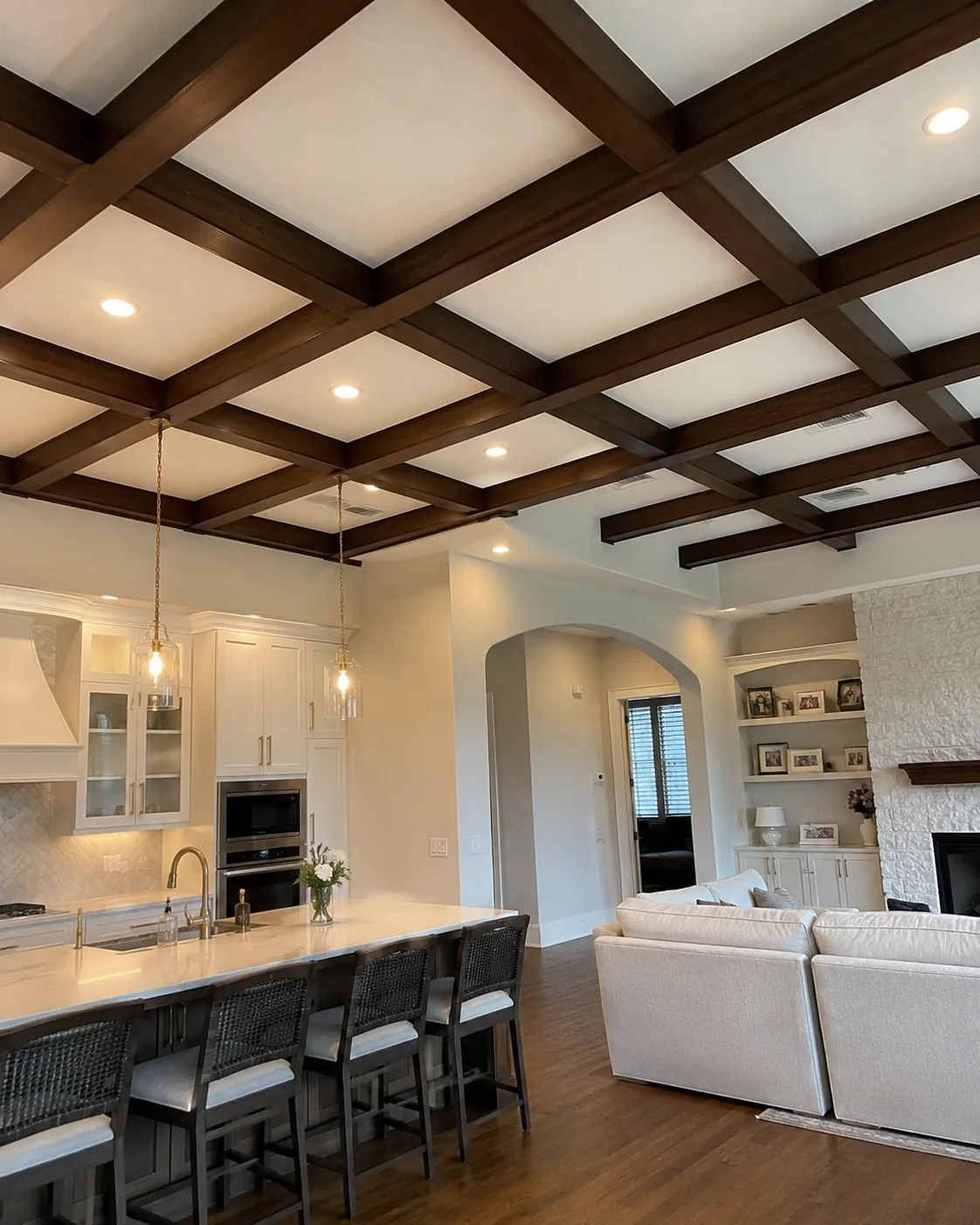
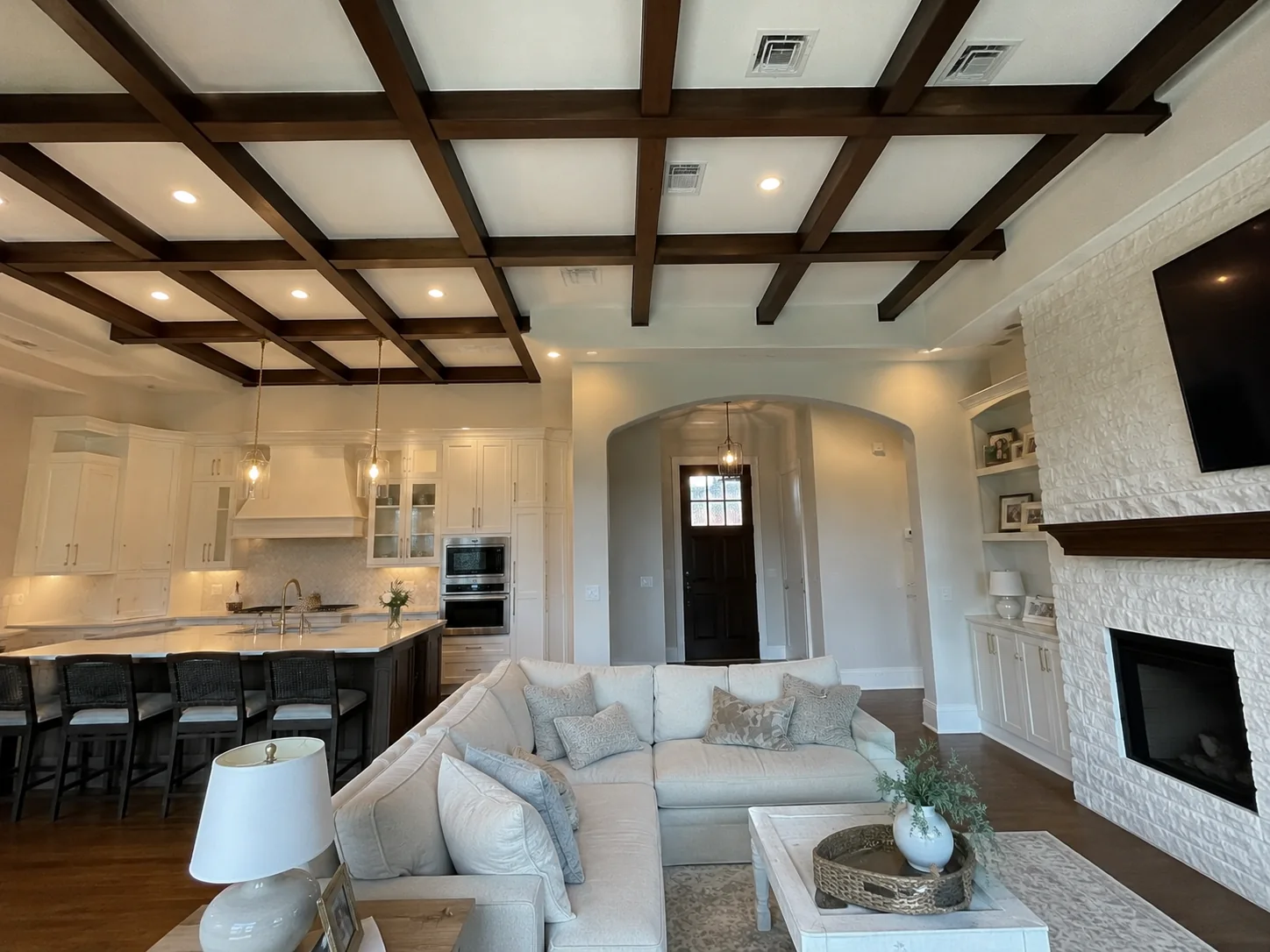
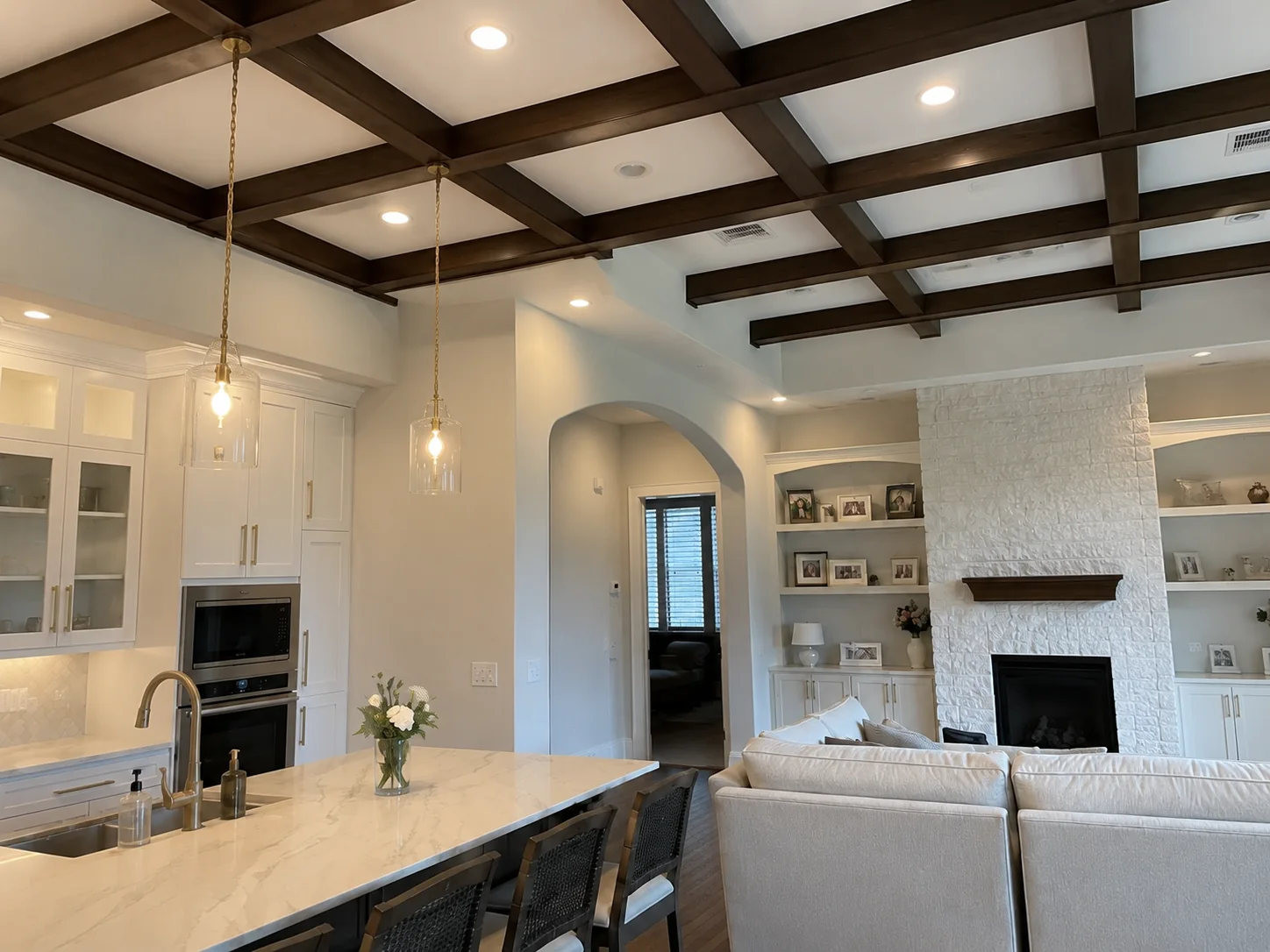
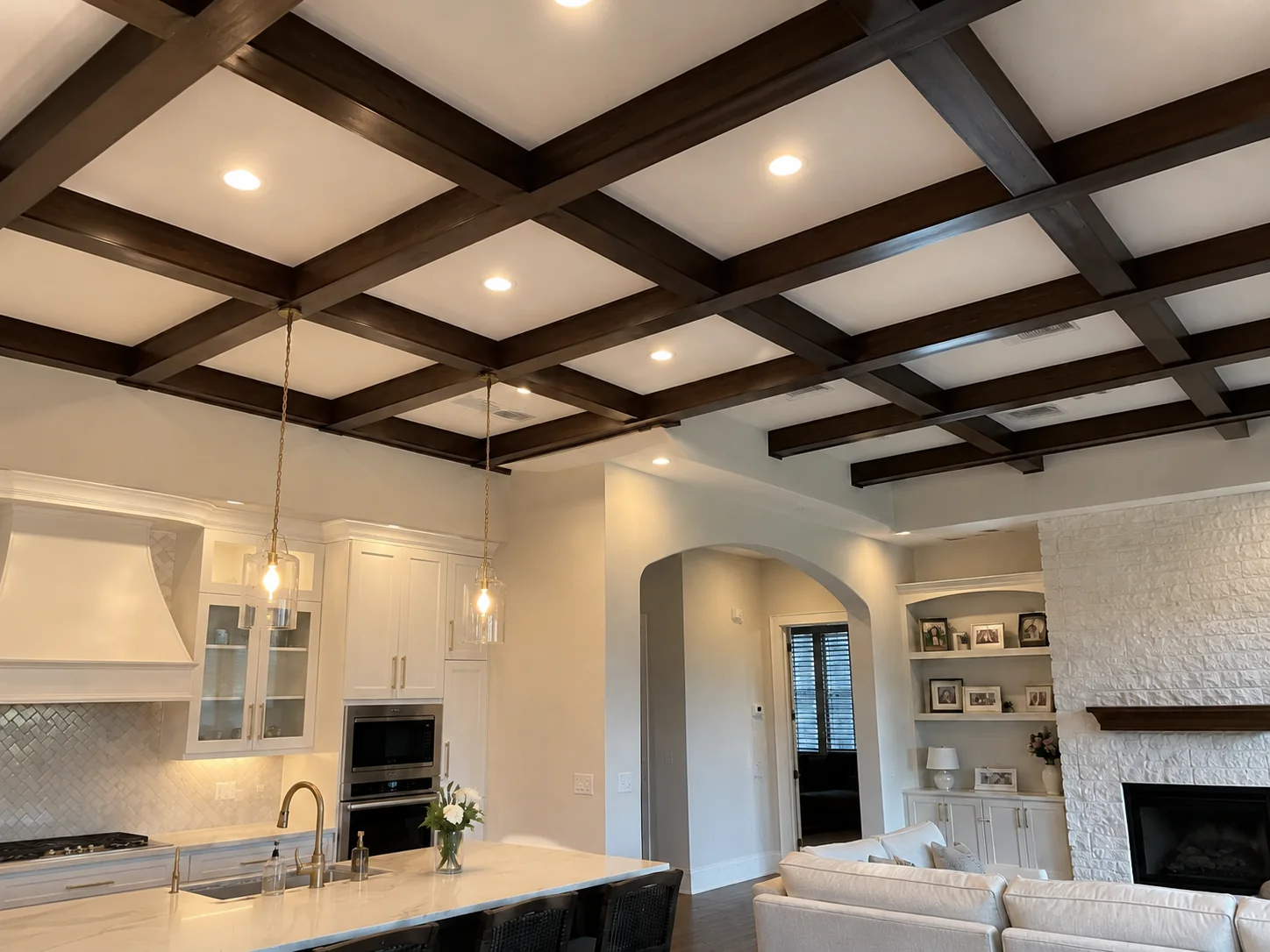
Coffered Ceilings
Coffered ceilings feature a grid of sunken panels created by crossing beams. Painting coffered ceilings involves painting the beam faces, the underside of the beams, and the recessed panels. Often in different colors or finishes. The beam faces may get a semi-gloss finish to catch light while the recessed panels get a flat finish. This is detail-intensive work that typically takes 50 to 75% longer per square foot than a flat ceiling.
Textured Ceilings (Non-Popcorn)
Many Tampa Bay homes have knockdown, orange peel, or skip-trowel textured ceilings. These textures hold more paint than smooth surfaces, requiring adjusted coverage rates. We use slightly thicker nap rollers (5/8 to 3/4 inch) to ensure paint fills every crevice of the texture. If you want to convert a textured ceiling to smooth, we handle that as well, skim coating the texture flat before painting. For popcorn ceiling removal, see our dedicated popcorn ceiling removal page.
How Do We Handle Ceiling Water Stains?
Water stains on ceilings are extremely common in Tampa Bay. the result of roof leaks during heavy storms, HVAC condensation line overflows, or plumbing failures in second-floor bathrooms. Repainting over water stains without proper treatment is one of the most common DIY mistakes we see.
Water stains contain dissolved minerals, tannins from wood framing, and other contaminants that migrate through standard latex paint. Within a few days to a few weeks, a brownish discoloration bleeds through the fresh paint, and the stain is visible again.
Our water stain treatment process:
- Source verification: We confirm that the water source has been repaired. Painting over an active or intermittent leak is a waste of time and money.
- Surface preparation: Any damaged drywall, sagging, soft spots, bubbling tape is repaired. Minor damage is patched with joint compound and sanded smooth. Larger areas may require drywall section replacement, which our drywall repair team handles.
- Stain-blocking primer: We apply a shellac-based stain-blocking primer (Zinsser BIN or equivalent) to the stained area and at least 2 inches beyond its visible border. Shellac-based primers are the only reliable option for blocking water stains, water-based "stain-blocking" primers are not effective against tannin bleed-through.
- Feathering and blending: The primed area is topcoated to match the surrounding ceiling. If the ceiling is being fully repainted, the stain treatment blends seamlessly. If only the stained area is being spot-repaired, we feather the topcoat into the surrounding paint to minimize visible transition lines.
What Paint Products Do We Use on Ceilings?
Ceiling paint is not the same as wall paint. We use products specifically formulated for overhead application:
- Higher viscosity: Ceiling paints are thicker than wall paints to resist dripping and spattering during overhead roller application. This reduces cleanup and prevents paint drops from damaging floors and furniture.
- Ultra-flat sheen: We use dead-flat or ultra-flat sheens that absorb light rather than reflecting it. This hides surface imperfections, roller marks, and minor texture variations that any amount of sheen would reveal.
- Splatter resistance: Professional ceiling paints are formulated to minimize roller splatter. the tiny droplets that fly off the roller during fast rolling. This is particularly important in occupied homes where furniture and flooring must be protected.
Our standard ceiling paint is Sherwin-Williams ProMar 200 Zero VOC Flat in Ceiling White, which provides excellent coverage, splatter resistance, and a clean, bright white finish. For kitchens and bathrooms, we upgrade to a mildew-resistant formulation. For accent-colored ceilings, we use the appropriate wall paint in the selected color, applied with ceiling-specific techniques.
What Is the Proper Sequence for Painting Ceilings in a Whole-House Project?
When we are painting an entire home interior, ceilings, walls, and trim. the sequence matters significantly for both quality and efficiency:
- Ceilings first: All ceiling work is completed before any wall painting begins. This allows us to be aggressive with roller coverage without worrying about overspray or drips on freshly painted walls. Any ceiling paint that lands on walls is simply painted over during the wall phase.
- Walls second: Wall painting proceeds room by room after ceilings are complete. The ceiling/wall junction is cut in carefully during wall painting, creating a sharp line against the already-dry ceiling paint.
- Trim and doors last: Doors, baseboards, crown molding, and window trim are painted after walls and ceilings, since these elements contact both surfaces and any masking lines need to be clean and final.
This sequence is standard professional practice, but it is worth understanding because it affects scheduling. Ceiling work needs to be completed and dry before wall work begins in each area.
What Preparation Do Ceilings Require Before Painting?
Ceiling preparation varies by condition but typically includes:
- Cleaning: Ceilings accumulate dust, cobwebs, and in kitchens, a thin film of grease and cooking residue. We vacuum or dry-wipe ceilings before painting. Kitchen ceilings receive a TSP (trisodium phosphate) wash to remove grease that would prevent paint adhesion.
- Repair: Nail pops (common in homes built in the 1990s and 2000s as truss lumber dries and shifts), drywall tape cracks, and corner bead separations are repaired with joint compound and sanded smooth before painting.
- Masking: All ceiling fixtures, ceiling fans, recessed light trims, and smoke detectors are either removed or carefully masked. We lay drop cloths over all floors, furniture, and fixtures in the room.
- Priming: Full ceiling priming is required when painting over dark colors, heavy staining, or new/patched drywall. Spot priming is used for isolated stains or repairs.
Why Hire a Professional for Ceiling Painting?
Ceiling painting is one of the most physically demanding and technically unforgiving interior painting tasks. Working overhead with a loaded roller for extended periods is exhausting and leads to inconsistent results as fatigue sets in. Visible lap marks, missed spots, and uneven coverage on a ceiling are permanent until the ceiling is repainted, and they are glaringly obvious every time you look up.
Professional ceiling painters work in systematic patterns, maintain consistent roller pressure and speed, and use the right products and equipment to achieve a factory-smooth finish. For high, vaulted, or complex ceiling configurations, professional painters have the scaffolding, safety equipment, and experience to complete the work safely and efficiently.
Ready to refresh your ceilings? Contact Westchase Painting Company at (813) 320-8710 or request a free estimate online. We serve homeowners throughout Westchase, Carrollwood, South Tampa, and the entire Tampa Bay area.