
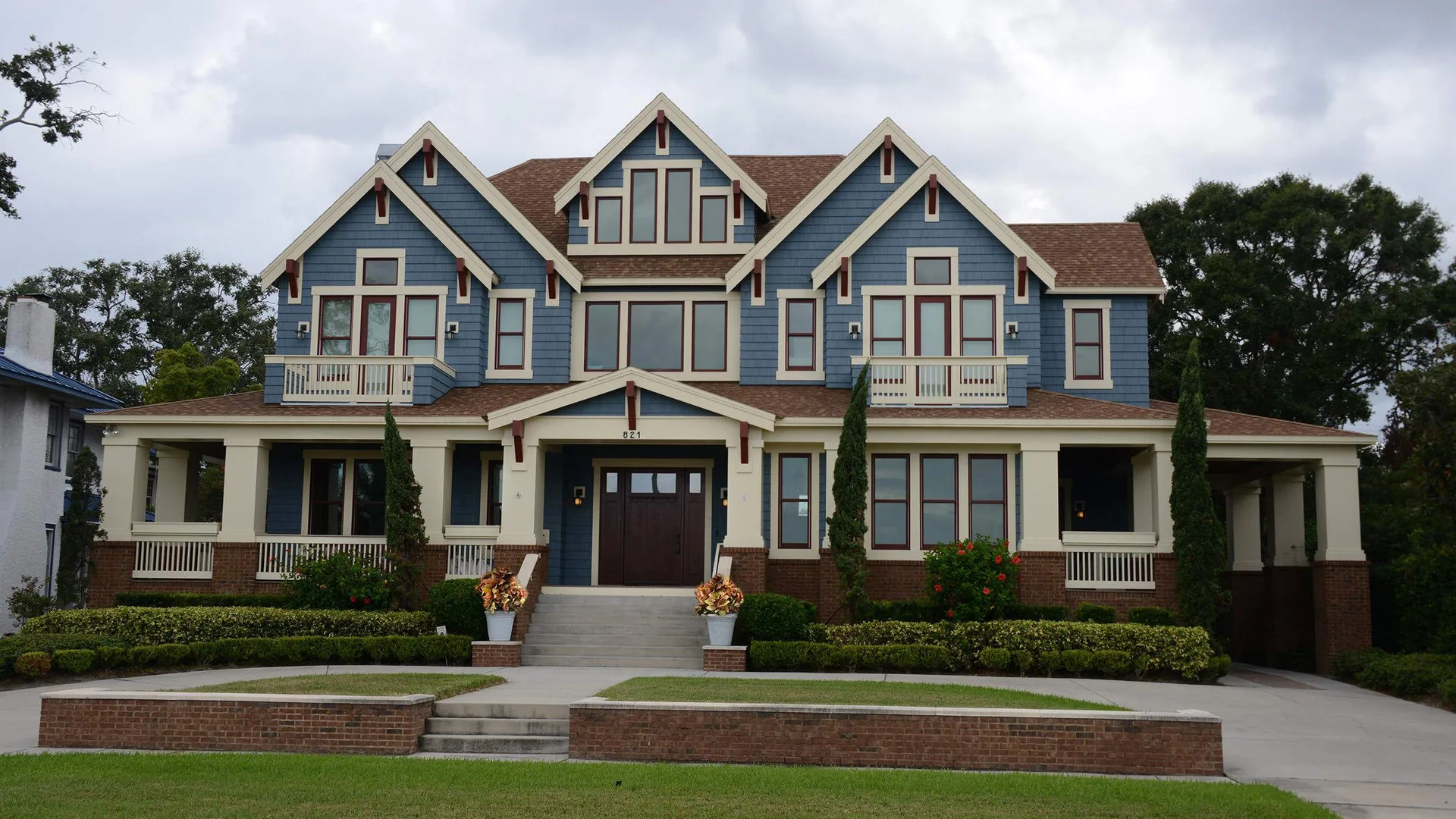
Hyde Park stands as Tampa's most celebrated historic neighborhood, formally designated as a local historic district in 1985 and listed on the National Register of Historic Places. This 160-acre district contains over 600 structures representing nearly every significant American residential architectural style from 1886 through the 1940s, with home values ranging from $800,000 to over $3 million on premier streets like Swann Avenue and South Boulevard. Westchase Painting provides interior painting services throughout Hyde Park, bringing the specialized knowledge that century-old interiors demand, from original plaster restoration to historically appropriate color selection to the painstaking detail work that defines these extraordinary homes.
Why Do Hyde Park Interiors Require Specialist Painters?
Interior painting in Hyde Park is fundamentally different from painting modern construction. These homes were built 80 to 140 years ago using materials and techniques that no longer exist in standard residential construction. Original plaster walls, three-coat lime and horsehair plaster over wood lath, behave entirely differently from modern drywall. Plaster absorbs moisture at different rates, develops characteristic cracking patterns as the building moves with age and Florida's thermal cycles, and can harbor decades of paint layers that create adhesion challenges invisible to untrained eyes.
Hyde Park's architectural details multiply the complexity exponentially. A single Craftsman bungalow interior may include built-in bookcases with glass-paneled doors, plate rails with delicate molding profiles, window seats with paneled wainscoting beneath, box-beam or coffered ceilings, and six-panel solid wood doors with original hardware. Each of these elements requires individual preparation, specific primer selection based on the substrate and existing coating, and precise brush application that no amount of spraying can replicate. When we paint a Hyde Park interior, fully 50 to 60 percent of the project time is consumed by detail work on trim, built-ins, and architectural features.
The stakes are significant. Hyde Park's location near downtown Tampa, its walkability, its acclaimed restaurant scene on South Howard Avenue, and its architectural character make it one of Tampa's most desirable addresses. Interior painting quality directly affects both daily living enjoyment and the substantial property values at play. A poorly executed interior paint job, sloppy cut lines, paint runs on historic millwork, damaged plaster from aggressive preparation, diminishes both the home's character and its market value.
What Interior Challenges Are Unique to Hyde Park's Different Architectural Styles?
Each architectural style present in Hyde Park creates its own interior painting considerations:
Queen Anne homes (1890s–1910s): These Victorian-era residences feature the most ornate interiors in the district. Expect multiple rooms with different ceiling heights, elaborate crown molding with dental or egg-and-dart patterns, turned spindle room dividers, decorative fireplace surrounds, and original staircase balustrades with individually turned balusters. Painting a Queen Anne interior requires 8 to 12 distinct color decisions and a painter who can maintain perfectly crisp lines across dozens of transitions between body, trim, accent, and ceiling colors.
Craftsman bungalows (1910s–1930s): Hyde Park's bungalows showcase the Arts and Crafts aesthetic with built-in cabinetry, plate rails, box-beam ceilings, and exposed structural elements that were designed to be visible and beautiful. These homes celebrate natural materials, original wood trim may be stained rather than painted, requiring careful masking during wall painting or thoughtful conversion from stain to paint when owners prefer an updated look. We can replicate existing stain finishes or transition to painted trim while preserving the architectural character.
Colonial Revival (1920s–1940s): More formal and symmetrical, these interiors feature chair rails dividing walls into upper and lower sections (often with different colors or finishes), paneled wainscoting, formal crown molding, and six-panel doors throughout. The paint scheme typically uses a three-part wall system: wainscot color below the chair rail, body color above, and ceiling color. all separated by precisely painted trim in a fourth color.
Mediterranean Revival (1920s): Tampa's boom-era Mediterranean homes feature smooth or hand-textured plaster walls (sometimes with integral tinting), arched doorways and window openings, decorative tile accents, and exposed decorative beams. Interior painting must respect these textural qualities. we never sand away hand-applied plaster texture to make it "smooth," instead working with the existing character while refreshing color.
How Do You Handle Historic Plaster Walls in Hyde Park?
Original plaster is the single most common interior challenge in Hyde Park homes, and our approach to it separates professional historic painting from standard residential work:
Assessment: We tap-test all plaster walls to identify loose or "drummy" sections where the plaster has separated from the lath but hasn't yet cracked or fallen. These areas require re-anchoring with plaster washers or conditioned injection before painting to prevent future failure. We mark all affected areas during our initial evaluation so homeowners understand the scope of repair work.
Crack repair: Plaster cracks fall into two categories, stable cracks from past settling that have stopped moving, and active cracks from ongoing structural movement. Stable cracks can be filled with setting-type joint compound and sanded smooth. Active cracks require flexible repair materials that accommodate continued movement without re-cracking. We assess crack patterns and select appropriate repair methods for each area.
Skim coating: When plaster surfaces have become rough from repeated patching, aggressive sanding in previous paint jobs, or general age deterioration, we apply thin skim coats of joint compound to restore a smooth, uniform surface before painting. This is time-intensive but produces a dramatically better finish than trying to paint over uneven plaster.
Primer selection: Plaster requires specific primers. New plaster repairs need a PVA (polyvinyl acetate) primer to seal the porous surface. Older plaster with existing paint gets alkali-resistant bonding primer. Areas with water staining require shellac-based stain-blocking primer. We never use a single primer product across an entire plaster interior, conditions vary wall by wall, sometimes section by section.
How Much Does Interior Painting Cost in Hyde Park?
Hyde Park interior painting costs reflect the specialized preparation, detail intensity, and premium product requirements of historic properties. These ranges represent typical projects:
- Standard bungalow (1,200–1,800 sq ft): $5,500 – $9,500. Includes plaster repair, detail trim work, and premium products
- Larger historic home (2,000–3,000 sq ft): $9,000 – $18,000. Multiple rooms with elaborate trim, built-ins, and varied conditions
- Grand estate home (3,000+ sq ft): $15,000 – $30,000+. Queen Anne or Colonial Revival with maximum detail complexity
- Single room with historic detail: $800 – $2,500. Depends on size, trim complexity, and plaster condition
- Interior trim refinishing only: $3,000 – $8,000. All trim, baseboards, doors, and built-ins throughout
Hyde Park interior projects consistently cost 30 to 50 percent more than comparable-sized modern homes due to plaster repair, detail work, and the slower pace required by historic materials. We provide room-by-room pricing so homeowners can prioritize and phase projects to manage investment. Many Hyde Park homeowners paint two or three rooms annually, systematically refreshing their entire home over several years.
What Paint Products Do You Recommend for Hyde Park Interiors?
Product selection for Hyde Park interiors emphasizes compatibility with historic substrates, longevity, and finish quality appropriate to the caliber of these homes:
Walls. Sherwin-Williams Duration or Emerald Interior: Duration provides excellent coverage and durability for most wall applications. Emerald's superior washability and stain resistance make it ideal for high-traffic areas in families with children. Both products maintain color integrity over time without yellowing or fading.
Trim and millwork. Sherwin-Williams Emerald Urethane Trim Enamel: This waterbased alkyd delivers the hard, smooth, furniture-quality finish that Hyde Park's ornate trim deserves. It flows and levels beautifully, dries to a durable enamel hardness, and doesn't yellow over time like traditional oil-based enamels. Essential for crown molding, built-ins, and paneled doors where finish quality is viewed at arm's length.
Specialty applications. Sherwin-Williams Emerald Urethane Trim Enamel: For cabinet-grade finish on built-in bookcases, window seats, and other furniture-quality elements, we sometimes use Advance for its exceptional flow, leveling, and hardness characteristics.
How Do You Approach Color Selection for Hyde Park Homes?
Color selection in Hyde Park often involves research into period-appropriate palettes. We work with homeowners to identify colors that honor their home's era while reflecting personal taste. The Sherwin-Williams Historic Collection and Sherwin-Williams Preservation Palette offer curated palettes inspired by specific architectural periods. For contributing structures in the historic district, we recommend consulting these resources to select interior colors that complement the home's character without being slavishly reproduced from any single historical source.
Practically, Hyde Park's interiors benefit from lighter colors that maximize the natural light coming through often-shaded porches and mature landscaping. Warm whites, soft creams, and muted sage or blue-gray tones are popular choices that feel both historic and fresh. Bold accent colors on dining room walls or study ceilings add personality, deep burgundy, navy, or forest green can create dramatic period-appropriate statements in formal rooms.
What Areas Near Hyde Park Do You Also Serve?
Our historic painting expertise extends throughout Tampa's established neighborhoods. Beyond Hyde Park, we serve South Tampa, Bayshore Beautiful, Palma Ceia, Davis Islands, Harbour Island, Seminole Heights, and all of west Tampa including Westchase and Carrollwood.
Frequently Asked Questions About Interior Painting in Hyde Park
Do I need Historic Preservation Commission approval for interior painting?
No. Tampa's Historic Preservation Commission oversight applies to exterior alterations on contributing structures. Interior painting does not require a Certificate of Appropriateness or any permit. You have complete freedom to paint interior spaces any color you choose.
My Hyde Park home has lead paint. How do you handle that?
Given that most Hyde Park homes predate the 1978 lead paint ban, lead-containing paint is virtually guaranteed in original layers. We follow EPA RRP (Renovation, Repair, and Painting) protocols for all pre-1978 homes, including containment barriers, HEPA-filtered sanding, wet scraping methods, and proper disposal of removed coatings. Our crew members maintain current EPA RRP certification.
Can you paint over wallpaper in my Hyde Park home?
We strongly recommend removing wallpaper before painting rather than painting over it, especially in Hyde Park where underlying plaster may need attention. Wallpaper removal on plaster requires careful technique to avoid damaging the plaster surface. We use steam removal and gentle scraping methods developed specifically for plaster-wall homes. See our wallpaper removal service for more detail.
How long does interior painting take in a Hyde Park home?
Due to the detail intensity, Hyde Park interiors take significantly longer than modern homes. A standard bungalow whole-home interior typically requires 5 to 8 working days. Larger homes with extensive trim and plaster repair may require 10 to 15 days. We provide specific timeline estimates during our evaluation based on your home's particular conditions and scope.
Can you match the original paint colors on my Hyde Park home?
Yes, we use computerized color matching that can analyze chips of existing paint to identify the original color formula. For homes with multiple historical paint layers, we can even identify colors from earlier periods by carefully exposing underlying layers. This can be fascinating for homeowners interested in their home's color history.
Do you handle ceiling painting in homes with decorative plaster ceilings?
Absolutely. We paint flat, coved, coffered, and decorative medallion ceilings throughout Hyde Park. Decorative plaster ceiling elements like medallions and cornices require careful hand-brushing with specialty primers and paints that maintain crisp detail without filling ornamental relief. We take particular care with box-beam ceilings common in Craftsman homes, painting beams and ceiling panels in coordinated colors.
Ready to refresh the interior of your Hyde Park home with the expertise it deserves? Contact Westchase Painting at (813) 320-8710 for a free, detailed estimate. We'll evaluate your home's specific architectural features and provide honest recommendations tailored to its character and your goals.