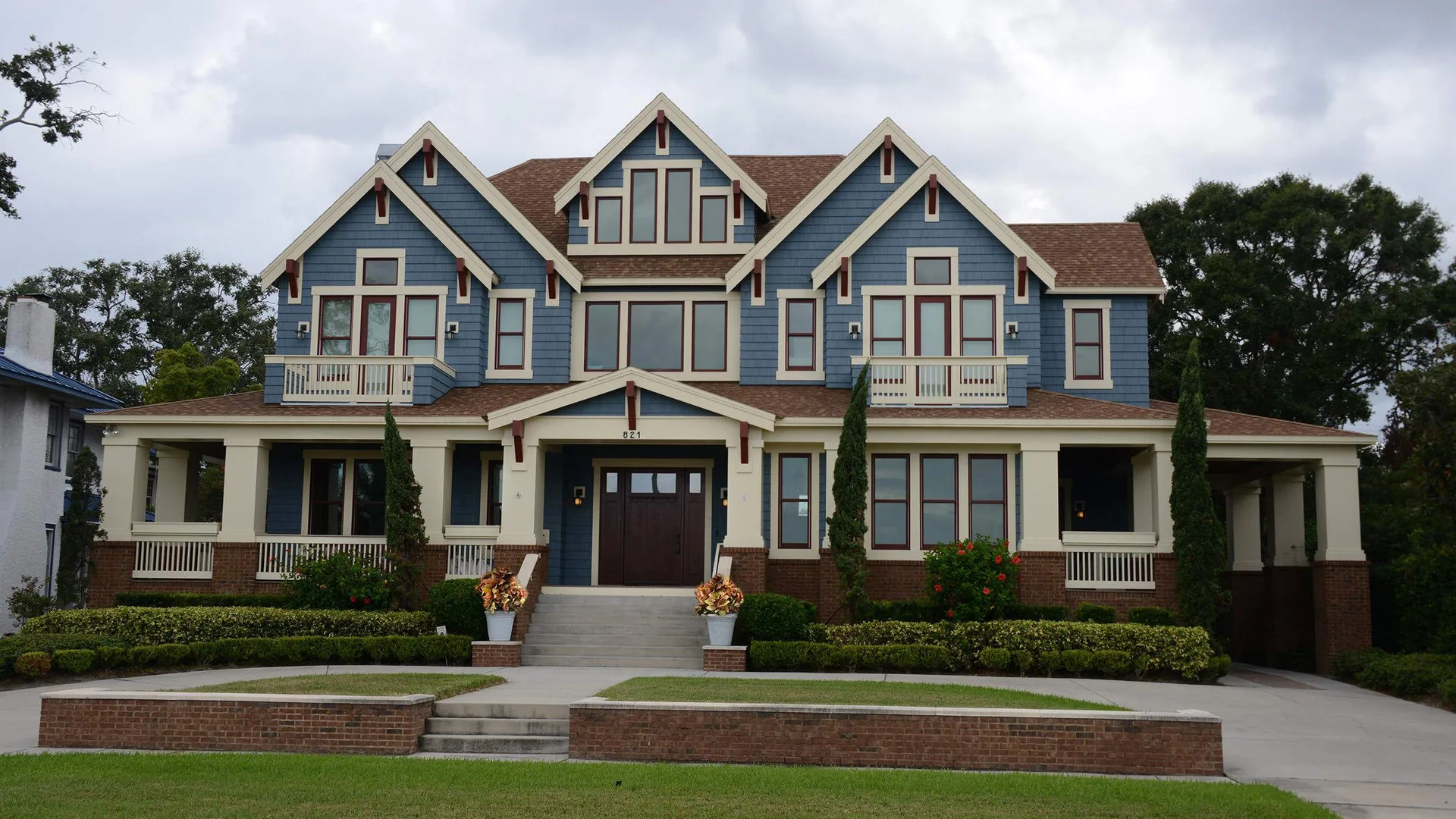
Hyde Park is Tampa's premier nationally designated historic district. a neighborhood where Mediterranean revivals, Prairie Style homes, Tudor cottages, Arts and Crafts bungalows, Colonial residences, and Queen Anne Victorians line oak-canopied streets just minutes from downtown Tampa and the iconic Bayshore Boulevard. With median home values around $700,000 and luxury properties exceeding $5 million near the waterfront, Hyde Park demands exterior painting expertise that goes far beyond standard residential service. Every exterior paint project in this district must honor architectural heritage, meet historic preservation guidelines, withstand Tampa Bay's demanding climate, and deliver the flawless finish quality that Hyde Park's discerning homeowners expect.
What Makes Exterior Painting in Hyde Park Different from Other Tampa Neighborhoods?
Hyde Park's historic district designation creates requirements that do not apply in typical Tampa residential neighborhoods. The Architectural Review Committee (ARC) reviews exterior modifications including paint color changes, requiring homeowners to submit applications and receive approval before work begins. This process adds a layer of planning that must be factored into project timelines.
We assist Hyde Park homeowners through the ARC approval process, providing paint color samples, historical references, and documentation that supports approval. We maintain a library of approved historic color palettes from Sherwin-Williams Historic Collection, Sherwin-Williams Preservation Palette, and Farrow & Ball Archive Collection specifically for Hyde Park consultations. These palettes are pre-vetted to align with preservation guidelines, streamlining approval.
Beyond regulatory requirements, Hyde Park's architectural diversity demands versatility that few painting contractors can deliver. A Mediterranean revival requires different preparation, products, and techniques than a Craftsman bungalow. Stucco surfaces, wood clapboard siding, decorative wood shingles, ornamental plaster detailing, wood window frames, and period-appropriate shutters may all appear on a single Hyde Park home. each substrate requiring specific preparation and compatible coating systems.
How Do You Handle Hyde Park's Historic Wood Exterior Elements?
Many Hyde Park homes built in the 1910s through 1940s feature original wood siding, wood window frames, decorative brackets, porch columns, balustrades, and ornamental trim that require specialized exterior painting techniques. These elements are often irreplaceable and must be preserved rather than replaced whenever possible.
Wood condition assessment is the critical first step. We probe all wood elements for soundness, testing for rot, insect damage, and structural integrity. Sound wood with surface deterioration is scraped, sanded to bare wood where necessary, and consolidated with wood hardener before priming. Rotted sections are removed and replaced with matching profiles when possible, or consolidated with epoxy wood restoration products that restore structural integrity while preserving original profiles.
Primer selection for Hyde Park wood elements depends on condition and previous coatings. For bare wood, we use Sherwin-Williams PrepRite ProBlock oil-based primer for its superior penetration and adhesion to aged wood fibers. For previously painted wood in good condition, high-adhesion acrylic primers provide excellent results. We never apply latex paint directly over bare wood on historic homes. the proper primer-topcoat system is essential for adhesion and longevity.
Topcoat application on Hyde Park wood elements uses 100% acrylic latex exterior paint in satin or semi-gloss finish. Sherwin-Williams Duration Exterior provides exceptional adhesion, UV resistance, and color retention on wood substrates. For front doors and high-touch elements, we recommend Sherwin-Williams Emerald Urethane for its exceptional hardness and abrasion resistance.
How Much Does Exterior Painting Cost in Hyde Park?
Exterior painting costs in Hyde Park reflect the additional complexity of working with historic architecture, premium material requirements, and the elevated finish quality expected in this market. Here are representative ranges:
- Bungalow or cottage (1,200 to 1,800 sq ft): $6,000 – $12,000. Includes wood siding preparation, multi-color trim scheme, ARC-compliant colors
- Two-story historic home (2,200 to 3,500 sq ft): $12,000 – $22,000. Full exterior including stucco or siding, elaborate trim and millwork, window restoration, porch elements
- Estate or luxury property (4,000+ sq ft): $20,000 – $45,000+. Comprehensive restoration including multiple substrates, decorative elements, carriage house, garden walls, and ancillary structures
Hyde Park exterior painting costs are typically 30 to 50 percent higher than comparable-sized homes in newer neighborhoods due to the labor-intensive preparation, multi-substrate expertise, and premium material requirements specific to historic properties. Every estimate is detailed and transparent, itemizing each element of the project.
What Exterior Colors Are Appropriate for Hyde Park Historic Homes?
Color selection in Hyde Park balances historical authenticity with personal expression, guided by the ARC's review process. While specific requirements vary by home style and location within the district, general principles apply across Hyde Park:
Mediterranean revivals suit warm cream, terra cotta, and earth tone palettes with darker accent colors on shutters and doors. Sherwin-Williams Whole Wheat, Ivoire, and warm stucco tones complement the tile roofs and arched openings characteristic of this style.
Craftsman bungalows historically featured multi-color schemes with body, trim, and accent colors that highlight the home's structural elements. Earth tones, olives, forest greens, deep reds, warm browns with contrasting lighter trim create the authentic Craftsman character. Sherwin-Williams Historic Collection includes curated Craftsman palettes from the 1910s-1930s era.
Colonial and Georgian styles favor classic combinations: white body with dark shutters, or cream body with forest green or navy shutters. These timeless schemes have strong historical precedent and typically receive straightforward ARC approval.
Contemporary approaches are gaining acceptance in portions of Hyde Park, particularly outside the core historic zone. Sophisticated warm whites (Sherwin-Williams Alabaster, Dover White), charcoal accents, and matte black trim create a modern interpretation of historic architecture that honors proportions while updating the color vocabulary.
How Do You Protect Hyde Park's Exterior Paint from Tampa Bay Weather?
Hyde Park's proximity to Tampa Bay and Hillsborough Bay exposes homes to salt-laden air, intense UV radiation from south-facing exposures along Bayshore Boulevard, driving rain during hurricane season, and elevated humidity year-round. Homes along Bayshore and the waterfront receive approximately 2,500 hours of direct sunlight annually, among the highest UV exposure rates in the Tampa metro area.
Our Hyde Park exterior coating systems are engineered for these conditions. For stucco surfaces, we use Sherwin-Williams Duration or Emerald Exterior with advanced UV absorbers and mildew-resistant formulations. For wood elements, marine-grade rust-inhibiting primers protect metal fasteners while flexible acrylic topcoats accommodate the expansion and contraction that Tampa's temperature swings produce. All exterior coatings include encapsulated biocides that resist mold and mildew growth throughout the coating's service life.
We recommend exterior repainting every 7 to 10 years for inland Hyde Park facades and every 5 to 7 years for waterfront-facing facades. Properties along Bayshore Boulevard with direct bay exposure may need more frequent attention on windward elevations. Regular pressure washing between paint cycles. every 18 to 24 months with mildew-killing solution, significantly extends coating life.
What Exterior Painting Preparation Is Required for Hyde Park Stucco Homes?
While Hyde Park is known for its wood-sided historic homes, many properties, particularly Mediterranean revivals, Spanish-influenced homes, and newer infill construction, feature stucco exteriors that require specialized preparation. Hyde Park stucco ranges from original lime-based plaster applied in the 1920s to modern Portland cement stucco on later additions and renovations. Each type requires different treatment.
Original lime-based stucco is softer and more porous than modern Portland cement stucco. Aggressive pressure washing can damage original lime stucco surfaces. we use reduced PSI (under 1500) with appropriate detergents to clean these delicate surfaces without erosion. Cracks in original stucco are repaired with lime-based patching compounds that match the original material's flexibility and permeability. Using rigid Portland cement patches on flexible lime stucco causes the patch to crack and separate at the boundaries. a common mistake that less experienced contractors make on Hyde Park's older homes.
For modern stucco on Hyde Park properties, our standard preparation includes professional-grade pressure washing at 2500 to 3000 PSI with mildew-killing solution, routing and filling cracks with flexible elastomeric caulk, feather-sanding any rough patches, and applying appropriate primer based on the stucco's condition and previous coating history. Two full coats of premium acrylic exterior paint follow, applied by spray with immediate back-rolling to work the coating into the stucco's texture for complete coverage and adhesion.
Frequently Asked Questions About Exterior Painting in Hyde Park
Do I need ARC approval before painting my Hyde Park home exterior?
If your home is within the Hyde Park Historic District, yes, exterior color changes require Architectural Review Committee approval. Repainting in the exact existing colors may not require review, but we recommend confirming with the ARC before beginning. We assist with color selection and documentation for ARC submissions to streamline the process.
How do you handle lead paint on pre-1978 Hyde Park homes?
Many Hyde Park homes built before 1978 have layers of lead-based paint. We follow EPA RRP (Renovation, Repair, and Painting) guidelines, including containment of work areas, wet scraping and sanding methods, HEPA vacuuming, and proper disposal of lead-contaminated debris. Our crews are RRP certified for lead-safe work practices.
Can you match the original historic colors of my Hyde Park home?
Yes. We can research period-appropriate color schemes based on your home's architectural style and construction era. Sherwin-Williams Historic Collection and Sherwin-Williams Preservation Palette offer palettes documented from specific architectural periods. For truly precise restoration, paint archaeology, sampling and analyzing original paint layers, can identify the exact original colors.
How long does exterior painting take on a Hyde Park historic home?
Historic home exterior painting typically takes 10 to 21 working days depending on home size, condition, and complexity of trim and architectural detailing. Multi-substrate homes with extensive wood restoration require more time than simpler stucco structures. We provide detailed timeline estimates during our initial consultation.
Do you paint Hyde Park garden walls, fences, and gates?
Yes. Many Hyde Park properties include masonry garden walls, wrought iron fences and gates, wooden privacy fences, and carriage houses that we paint as part of comprehensive exterior projects. These ancillary structures often benefit from coordinated color schemes that unify the property's appearance.
What warranty do you provide on Hyde Park exterior painting?
Our Hyde Park exterior painting projects carry a 5-year workmanship warranty on standard surfaces and a 3-year warranty on wood restoration elements. This supplements manufacturer product warranties of 15 to 25 years. We are based in nearby Westchase and provide responsive warranty service to all Hyde Park clients. Contact us at (813) 320-8710 for a complimentary Hyde Park exterior painting consultation.