
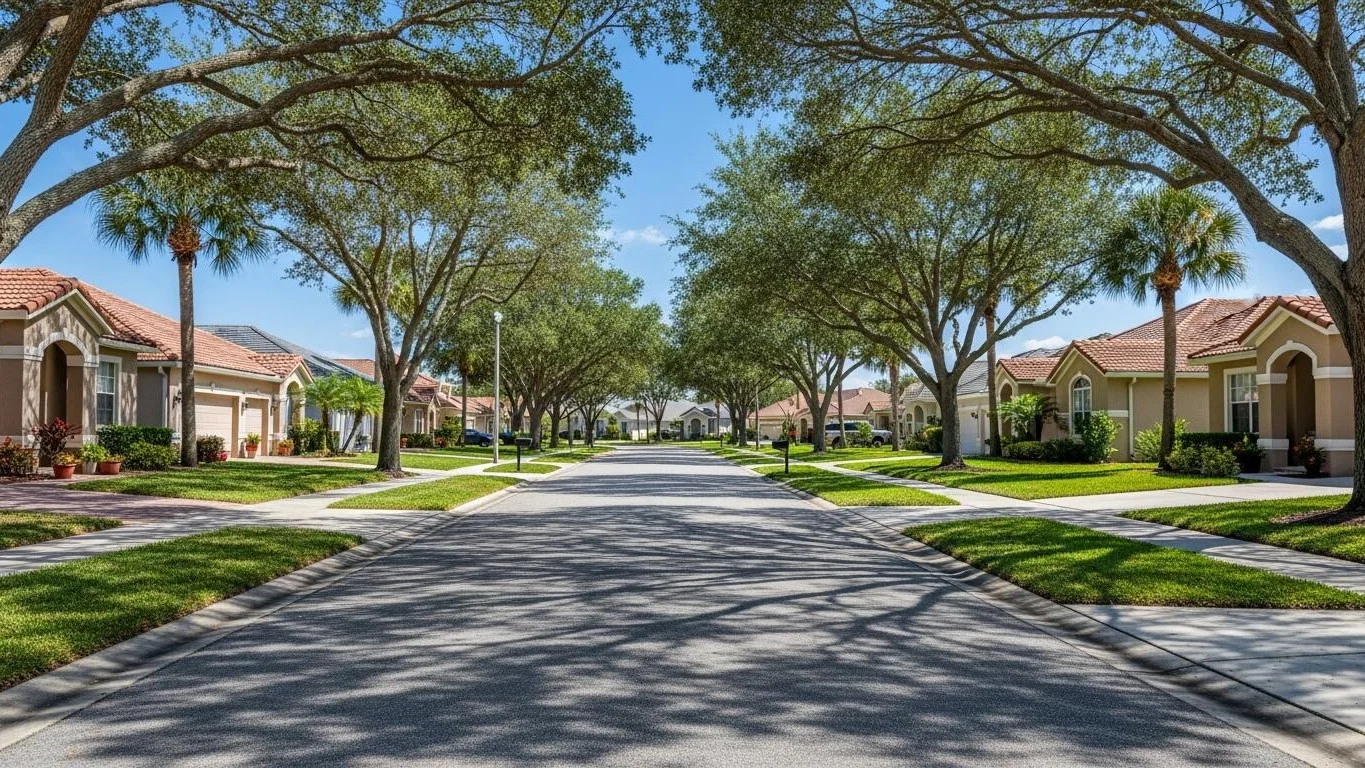
Citrus Park's location in northwest Hillsborough County places its approximately 25,000 residents at the intersection of established suburban living and Tampa Bay's demanding subtropical climate. With homes spanning from the early 1980s concrete block construction along Gunn Highway to newer stucco-over-frame builds in gated communities constructed through the 2010s, exterior painting in Citrus Park requires an understanding of how different construction eras and materials respond to Florida's relentless combination of UV radiation, driving rain, and humidity that rarely drops below 60 percent. Median home values near $375,000 make exterior maintenance a meaningful investment in property value, and few improvements deliver more visible impact than a professional exterior repaint.
Why Does Citrus Park's Climate Demand More Frequent Exterior Painting?
Tampa Bay receives an average of 2,800 hours of direct sunshine annually, among the highest in the United States. This UV bombardment breaks down paint binders and pigments at the molecular level, causing chalking (a powdery residue on the surface), color fading, and eventual film failure. South and west-facing walls on Citrus Park homes receive the most intense exposure and typically show deterioration 2 to 3 years before north and east-facing walls.
The area's 52 inches of average annual rainfall, concentrated heavily during June through September afternoon thunderstorms, creates another layer of stress. Windswept rain penetrates behind trim pieces, fascia boards, and at stucco-to-soffit transitions, causing hidden moisture damage that reveals itself as peeling paint, wood rot, and dark streaking. Citrus Park's mature oak and cypress tree canopy, while beautiful, contributes to exterior paint problems by shading certain wall sections, trapping moisture, and dropping organic debris that feeds mildew and algae growth.
We recommend exterior repainting every 7 to 10 years for Citrus Park homes, more frequently for homes with significant shade coverage or older paint systems that didn't use acrylic latex technology. Catching deterioration early with a repaint is dramatically less expensive than waiting until stucco cracking, wood rot, or water intrusion requires structural repairs before painting can begin.
What Exterior Surfaces Do We Paint on Citrus Park Homes?
A comprehensive exterior painting project in Citrus Park typically covers multiple surface types, each requiring specific preparation and product selection:
Stucco walls make up the primary exterior surface on most Citrus Park homes. Our stucco painting service includes thorough pressure washing, crack repair using flexible elastomeric filler for cracks up to 1/8 inch, and application of 100-percent acrylic latex paint that expands and contracts with Florida's temperature swings. For homes with significant stucco damage, we coordinate with stucco repair specialists before painting.
Wood trim, fascia, and soffits are the most vulnerable exterior components in Citrus Park's climate. Older homes with original wood fascia boards often show rot at gutter attachment points and at corners where two boards meet. We replace rotted wood before painting and apply primer-sealer to bare wood to prevent moisture penetration. Trim painting on exterior surfaces uses semi-gloss acrylic for maximum weather resistance and visual contrast against wall colors.
Front doors, garage doors, and shutters receive dedicated attention as focal points that significantly impact curb appeal. Our door painting specialists sand, prime, and apply multiple coats to these high-visibility surfaces. Front door colors are a popular way to add personality, deep reds, navy blues, and rich greens are trending in Citrus Park.
Pool cage frames are common throughout Citrus Park, and our pool cage painting service restores oxidized aluminum frames with specialized coatings that withstand chlorinated water exposure and UV degradation. Pool cage repainting is one of the most impactful improvements for backyard aesthetics.
How Do Older vs. Newer Citrus Park Homes Differ in Exterior Painting Needs?
1980s concrete block construction homes in original Citrus Park neighborhoods present specific exterior challenges. These homes were built with poured concrete block walls finished with a cement-based stucco coat. After 40-plus years, the stucco may show map cracking. a pattern of fine intersecting cracks caused by thermal expansion and shrinkage cycles. Before painting, we clean these cracks, fill them with flexible elastomeric caulk, and apply a high-build primer that bridges minor imperfections. The block construction itself is inherently durable, but the stucco coating requires maintenance to prevent water infiltration.
Wood fascia and soffits on these older homes were often painted with oil-based paints that have become brittle and are now peeling. Converting from oil-based to modern acrylic latex requires proper surface preparation, sanding to remove loose material, applying a bonding primer, and then topcoating with high-quality acrylic. We never simply paint over peeling oil-based paint, as the new coating will fail within a year.
2000s to 2010s stucco-over-frame construction uses a completely different building system, wood or steel framing with synthetic stucco systems (EIFS) or traditional three-coat stucco over wire lath. These newer systems are generally in better condition but present their own challenges. EIFS requires careful paint selection. we use breathable acrylic coatings that allow moisture vapor to escape while preventing liquid water from penetrating. Traditional stucco over frame can develop cracks at framing joints where wood studs expand and contract seasonally.
How Do We Prepare Citrus Park Home Exteriors for Painting?
Preparation is the difference between an exterior paint job that lasts 3 years and one that lasts 10. Our Citrus Park exterior preparation process includes:
Professional pressure washing at 2,500 to 3,000 PSI removes accumulated dirt, mildew, algae, loose paint, and chalking. We use a downstream injection system to apply a mildewcide solution during washing that kills mold spores at the root, simply pressure washing without treatment allows mildew to regrow within months. We wash the entire home including soffits, fascia, driveways, and walkways adjacent to work areas.
Stucco crack repair addresses both hairline and structural cracks. Hairline cracks are filled with elastomeric sealant that remains flexible through temperature cycles. Cracks wider than 1/4 inch indicate structural movement and may require evaluation before painting. we identify these during our free estimate and recommend appropriate repair before committing to a paint job that won't last.
Wood repair and replacement is often necessary on fascia boards, trim pieces, and window sills. We replace any wood showing soft spots, splitting, or active rot with primed lumber before painting. Caulking at all wood-to-stucco, wood-to-wood, and around window and door frames seals potential water entry points.
Masking and protection includes covering windows, doors, landscaping, walkways, driveways, light fixtures, and any surfaces not being painted. We use 12-inch masking paper on windows and doors (not just tape) for clean, crisp lines.
How Much Does Exterior Painting Cost in Citrus Park?
Exterior painting costs in Citrus Park typically range from $1.50 to $4.50 per square foot of exterior wall surface, with total project costs depending on home size, condition, number of stories, and paint system selected:
- Single-story block homes (1,000–1,600 sq ft): $3,500 to $6,500. Straightforward access, but older surfaces may need more prep.
- Mid-size single-story homes (1,600–2,400 sq ft): $5,500 to $9,500. Standard preparation with typical stucco and trim scope.
- Two-story homes (2,000–3,000 sq ft): $8,000 to $14,500. Requires scaffolding or lift equipment for upper-level access.
- Larger estate homes (3,000+ sq ft): $13,000 to $22,000+. Complex architectural details, extensive trim, multiple surface types.
- Pool cage repainting: $1,200 to $3,500 depending on cage size and condition.
All estimates include pressure washing, minor stucco repair, wood rot repair (up to 10 linear feet), caulking, primer where needed, two coats of premium acrylic paint, and cleanup. We provide detailed written proposals that break down costs by component so you know exactly what you're paying for.
What Exterior Colors Work Best for Citrus Park Homes?
Exterior color selection in Citrus Park must balance personal preference with neighborhood context and, for homes in HOA communities, association guidelines. We provide free color consultations that consider your home's architectural style, roof color, landscaping, and surroundings.
The most popular exterior body colors in Citrus Park currently are warm off-whites and creams, light warm grays, and soft sage greens. all of which complement the area's tropical landscaping and terra cotta or gray roof tiles common in the community. For trim, crisp white remains the dominant choice, though we're seeing increasing interest in matching or slightly contrasting trim colors for a more contemporary appearance.
Dark body colors are not recommended for Florida stucco exteriors because they absorb significantly more heat, accelerating thermal stress on the stucco system and causing the paint to fade faster. If you prefer a darker aesthetic, we recommend using darker accents on front doors, shutters, and trim while keeping body color in the light-to-medium range.
Frequently Asked Questions About Exterior Painting in Citrus Park
How long does exterior painting last in Citrus Park?
A professional exterior paint job using premium acrylic latex on properly prepared surfaces typically lasts 8 to 12 years in Citrus Park's climate. South and west-facing walls may show wear sooner due to direct sun exposure. Regular maintenance, washing the exterior annually and touching up minor damage, extends the lifespan significantly.
What time of year is best for exterior painting in Citrus Park?
October through May is the optimal window for exterior painting in Citrus Park, when afternoon thunderstorms are less frequent and humidity levels are relatively lower. However, we paint exteriors year-round by monitoring weather patterns and scheduling work around afternoon rain during summer months. Early morning starts allow us to complete most daily work before afternoon storms arrive.
Do you need to pressure wash before exterior painting?
Yes, pressure washing is mandatory for any quality exterior paint job in Florida. Citrus Park homes accumulate mildew, algae, dirt, and chalked paint that prevent proper adhesion. Painting over contaminated surfaces results in peeling within 6 to 12 months. Our wash includes mildewcide treatment to kill biological growth at the root.
Will you repair stucco cracks before painting?
Yes, minor stucco crack repair is included in all exterior painting estimates. We fill hairline and small cracks with flexible elastomeric sealant. Larger structural cracks, missing stucco sections, or damage from impact require separate repair estimates, which we coordinate before painting begins.
Can you paint my Citrus Park home if it has an HOA?
Absolutely. Many Citrus Park communities have HOAs with exterior color guidelines. We work within these requirements and can help you submit color selections for approval before starting work. We're familiar with the approval processes for most major Citrus Park HOAs.
What nearby areas do you also serve for exterior painting?
Beyond Citrus Park, we provide exterior painting throughout Westchase, Countryway, Town 'N' Country, Odessa, Keystone, Carrollwood, and Oldsmar. Our crews are based in Westchase. just 5 minutes from anywhere in Citrus Park.