
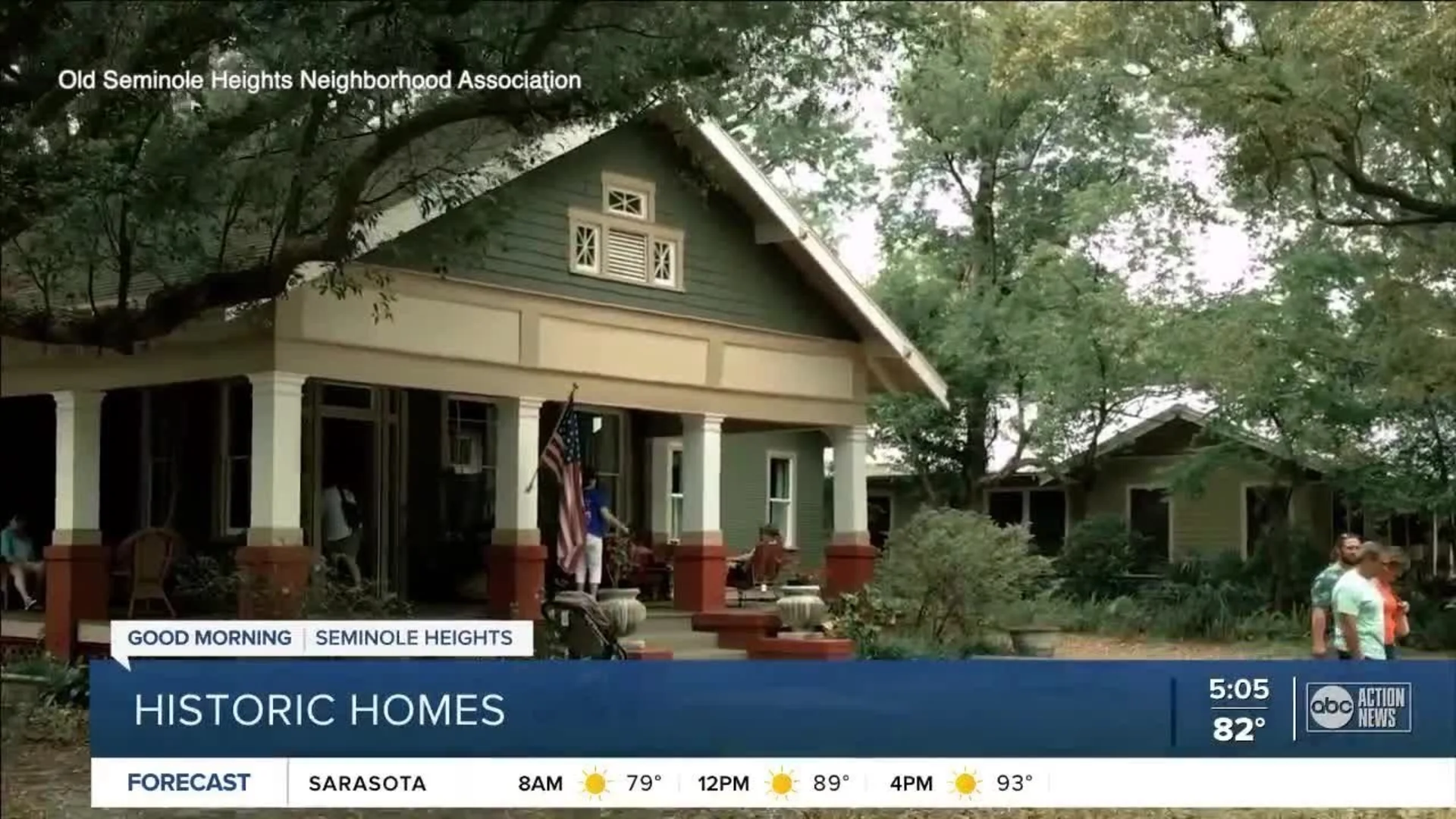
Seminole Heights contains one of Florida's finest concentrations of early 20th-century residential architecture. a tree-shaded neighborhood of Craftsman bungalows, Colonial Revival homes, and vernacular cottages established in 1911. With portions listed on the National Register of Historic Places, median home prices reaching $580,000 across the broader neighborhood, and a passionate community of preservation-minded residents, exterior painting in Seminole Heights demands technical expertise that goes far beyond standard residential work. Westchase Painting provides exterior painting services throughout Old Seminole Heights, South Seminole Heights, and Southeast Seminole Heights, bringing the specialized knowledge that century-old wood-framed homes require.
Why Is Exterior Painting in Seminole Heights Fundamentally Different?
The most significant difference between painting a Seminole Heights bungalow and painting a modern stucco home is the substrate. While most Tampa homes built after 1960 use concrete block with stucco exterior coating, Seminole Heights bungalows are wood-frame construction with original clapboard siding, tongue-and-groove porch ceilings, exposed rafter tails, wood window casings, and intricate porch details. Wood behaves completely differently from stucco. it expands and contracts with humidity changes, absorbs moisture that can cause paint failure from within, develops grain-related cracking patterns, and is susceptible to rot and insect damage that must be repaired before painting.
These homes have also accumulated 80 to 115 years of paint layers. A bungalow painted every 7 to 10 years since 1915 may carry 10 to 15 layers of accumulated coatings. This paint buildup creates adhesion challenges where newer layers pull away from failing older layers, thickness problems where paint has bridged gaps and now spans open voids, and alligatoring patterns where the thick paint mass cracks into connected cells as it becomes brittle with age. Simply adding another coat on top of failing paint is futile. it will peel within two years. Proper preparation often requires selective or complete paint removal on the most affected surfaces.
Historic preservation requirements add a regulatory dimension. For contributing structures in Seminole Heights' local historic districts, the Tampa Historic Preservation Commission (HPC) may require a Certificate of Appropriateness for significant color changes. Our team has guided numerous Seminole Heights homeowners through this process, helping select period-appropriate color palettes that satisfy both personal preference and preservation standards. We maintain relationships with HPC staff and understand the review criteria.
What Exterior Elements Require Attention on Seminole Heights Bungalows?
A typical Craftsman bungalow exterior includes numerous distinct elements, each requiring specific preparation and painting approaches:
Wood clapboard siding: The primary wall surface on most original bungalows. Clapboard develops specific failure patterns, face checking (small cracks along the grain), edge lifting where boards overlap, and back-priming failures where moisture penetrates from behind. We inspect each board for soundness, replace any sections with irreparable rot using period-matched profiles, and ensure all surfaces receive proper adhesion preparation.
Front porch and columns: The defining feature of the Craftsman bungalow. Full-width porches with tapered columns on masonry piers, decorative brackets, tongue-and-groove ceilings, beadboard knee walls, and turned balustrades. Porches receive maximum weather exposure and foot traffic, making them the first surfaces to show paint failure. Column bases are particularly vulnerable to moisture damage from rain splash. We repair deteriorated wood using epoxy consolidants and dutchman repairs that maintain the original profile.
Exposed rafter tails: The overhanging eaves of Craftsman homes expose the structural rafter ends, which are often decoratively shaped (bird's mouth cuts, scrolled ends). These projecting wood elements catch wind-driven rain, accumulate debris, and experience more extreme moisture cycling than protected surfaces. We inspect each rafter tail for rot, consolidate or replace damaged ones, and apply end-grain sealer before priming and painting.
Window and door trim: Original wood window casings, header trim, and sill pieces frame every opening. Sills are the most failure-prone component due to water pooling and UV exposure. We evaluate each sill and casing for soundness, repair with epoxy wood filler or replacement pieces as needed, and apply multiple coats of trim enamel for maximum protection.
Decorative gable details: Many bungalows feature decorative elements in gable fields, patterned shingles, louvered vents, exposed beam ends, and bargeboard trim. These high details require ladder or scaffold access and careful painting to maintain their visual contribution to the home's character.
How Does Your Exterior Process Work for Seminole Heights Homes?
Our exterior painting process for Seminole Heights bungalows follows a methodology developed specifically for historic wood-frame construction:
Comprehensive evaluation: We inspect every elevation methodically, documenting paint condition, wood damage, moisture indicators, and structural concerns. For homes in the historic district, we note any elements that might require HPC review. This assessment generates a detailed scope with per-element pricing and a recommended paint color scheme.
Paint removal where necessary: Unlike modern homes where preparation involves washing and light sanding, Seminole Heights bungalows often require selective paint removal. We use infrared paint removers (which soften paint for scraping without generating toxic fumes from lead paint layers), carbide scrapers for hand removal, and chemical strippers for detailed areas. Complete removal to bare wood isn't always necessary. we remove paint to the last well-adhered layer, feather edges, and build from there.
Wood repair and replacement: Damaged wood is repaired using wood epoxy consolidants for areas where the original profile must be preserved, or replacement boards milled to match the original profile for sections beyond repair. We use clear-grain, kiln-dried cedar or cypress for replacement pieces to ensure long-term durability and dimensional stability.
Caulking and sealing: All joints between siding boards, trim intersections, window and door frames, and other penetrations are caulked with premium flexible sealant. We remove old, failed caulk completely rather than layering new over old. End grain on exposed wood is sealed with specialized end-grain sealer that prevents moisture uptake through the most absorptive part of the wood.
Priming: All bare wood, repaired areas, and any surfaces where the existing paint has been removed receive oil-based or high-adhesion primer. We prime exposed wood within 24 hours of preparation to prevent moisture absorption and UV damage to bare fibers. Primer selection accounts for the wood species, exposure conditions, and topcoat compatibility.
Topcoat application: We apply two coats of premium exterior paint, primarily by brush on wood siding and trim. Brush application works paint into wood grain and surface texture more thoroughly than spray, creating better adhesion and more uniform coverage. We may spray-apply body coats on large uninterrupted wall surfaces but always back-brush to ensure penetration. Detail elements, columns, brackets, rafter tails, window trim, are exclusively brush-painted.
How Much Does Exterior Painting Cost in Seminole Heights?
Seminole Heights exterior painting costs reflect the intensive labor, specialized preparation, and premium materials that historic wood-frame homes require:
- Standard bungalow (1,000–1,500 sq ft): $6,000 – $12,000. One-story with typical wood siding, porch, and detail elements
- Larger bungalow (1,500–2,200 sq ft): $10,000 – $18,000. One-and-a-half story with dormer, expanded porch, or extensive trim
- Renovated/expanded home (2,200+ sq ft): $14,000 – $25,000. Original structure with additions requiring blended approach
- Porch restoration and painting: $3,000 – $7,000. Full porch refinishing including ceiling, columns, rails, and floor
- Trim and detail painting only: $3,500 – $8,000. Refreshing trim, windows, doors, and details while body paint remains sound
These costs run 40 to 70 percent higher than equivalent-sized modern homes due to the labor-intensive preparation, wood repair, lead paint management, and brush-applied finishes that wood-frame homes require. The investment protects structures that have survived over a century and helps preserve the architectural character that makes Seminole Heights one of Tampa's most desirable neighborhoods. With median home values at $462,500 to $580,000, professional exterior painting protects significant equity.
What Products Do You Use on Seminole Heights Exteriors?
Product selection for wood-frame historic homes prioritizes flexibility, adhesion, and breathability, different priorities than stucco homes:
Siding. Sherwin-Williams Duration Exterior: Both offer excellent adhesion on wood substrates, superior flexibility that moves with wood's expansion and contraction, and advanced UV protection. Duration's self-priming capability is useful on well-prepared surfaces, while Durationwhile Regal Select's exceptional flow creates a smoothapos;s exceptional flow creates a smooth, even finish on clapboard.
Trim. Sherwin-Williams Emerald Exterior or Duration Exterior in semi-gloss: Trim elements need maximum hardness and sheen to resist dirt accumulation and provide crisp visual contrast against body color. Semi-gloss finish highlights the carved and shaped details that define Craftsman architecture.
Porch ceilings. Sherwin-Williams Porch & Floor Enamel: Specifically formulated for horizontal surfaces exposed to moisture, temperature swings, and foot traffic (on floors). For ceilings, we often use a traditional light blue ("haint blue") that is both historically appropriate and functionally effective at deterring insects.
Frequently Asked Questions About Exterior Painting in Seminole Heights
Do I need Historic Preservation Commission approval to repaint my bungalow?
It depends on your location and the scope of change. Contributing structures in designated local historic districts may need a Certificate of Appropriateness for significant color changes. Maintenance repainting in the same or similar colors typically doesn't require review. We can help you determine whether your home is a contributing structure and guide you through the HPC process if needed.
How many colors should I use on my bungalow exterior?
Traditional Craftsman exteriors use three colors: a body color for siding, a trim color for window casings, corner boards, and fascia, and an accent color for doors, shutters, and decorative elements. Some homes add a fourth color for porch ceiling or columns. We help you select a coordinated palette that feels cohesive while highlighting your home's architectural details.
Can you match the original historic colors on my home?
Yes, we can expose and analyze underlying paint layers to identify original or early color schemes. This "color archaeology" is fascinating for homeowners interested in their home's history and can inform period-appropriate color selections. We prepare test patches for approval before proceeding with the full exterior.
How often should I repaint my Seminole Heights bungalow?
With premium products and proper preparation, a well-executed exterior paint job on a Seminole Heights bungalow should last 7 to 10 years. Sun-exposed elevations (typically south and west) may need attention sooner, while shaded north elevations last longer but require more mold treatment at repainting. Regular maintenance, washing every 2 to 3 years and prompt touch-up of any damage, extends the life of the coating system.
My bungalow has asbestos shingle siding from a mid-century renovation. Can you paint that?
Yes, asbestos cement shingles are actually excellent painting substrates when properly prepared. We clean, prime with masonry primer, and apply two coats of quality exterior paint. The key is never to sand, drill, cut, or otherwise disturb asbestos shingles in ways that create airborne fibers. Our process maintains the shingles intact while dramatically improving their appearance.
What about painting the contemporary infill homes in Seminole Heights?
Southeast Seminole Heights in particular has seen significant modern infill construction. These newer homes use standard contemporary materials. Hardie board, stucco, vinyl, and receive our standard modern exterior painting process. We adapt our approach to match whatever the structure requires, whether it's a 1915 bungalow or a 2020 new build.
Ready to protect and beautify the exterior of your Seminole Heights bungalow? Contact Westchase Painting at (813) 320-8710 for a free, detailed estimate. We'll evaluate your home's specific conditions and provide honest recommendations tailored to its age, construction, and character.